
The good example.
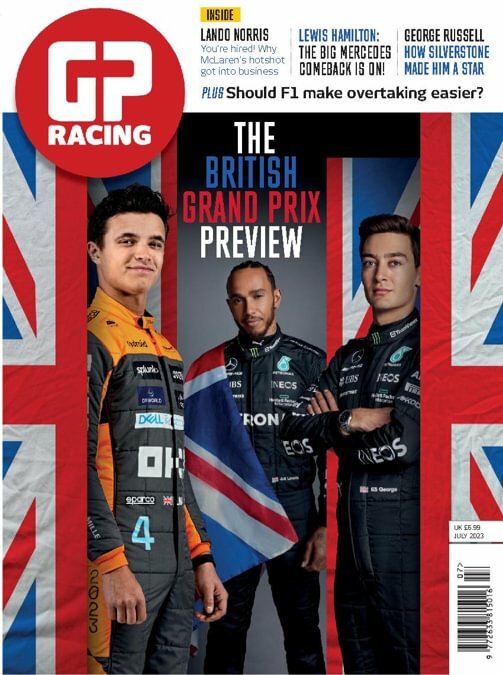
This is a good example of colour. This F1 magazine cover is promoting the British Grand Prix which is held at the Silverstone Circuit in Northamptonshire. The main heading text is presented to us using a sans serif font with tight kerning and the use of slight text size variations. The use of the sans serif font represents modernity and the act of progression. The “association with progression and modernity also extends to brands that want to appear innovative and adventurous” – (Grace Fussell, 2023). This is a wonderful way to present F1 because the sporting event is full of action and adventure. We notice that the typography is presented in assorted colours. ‘The’ and ‘Preview’ are shown in vibrant white, but ‘British’ and ‘Grand Prix’ are presented in the primary colours blue and red. The blue and red contrast with each other as red is a warm colour whereas blue is a cooler colour. Colour can evoke emotion, for example, David Jonson (2023) says warm colours “grab attention and create a feeling of optimism. You can use warm colours to get a strong visual effect on the design.” Cooler colours on the other hand are calmer and “arouse cool and pleasant feelings in mind.” – (David Jonson, 2023). These emotions from the colours represent the words well. ‘Grand Prix’ having a strong visual effect on the design, helps the reader understand the purpose of the magazine cover with ease. When these colours are combined, they are internationally known because these are the colours on the Great British flag. We see these colours repeatedly throughout this cover on the sides and in the background. The designer has referenced this a lot because it guides readers in thinking about Britain when they see this cover.
A bad example.
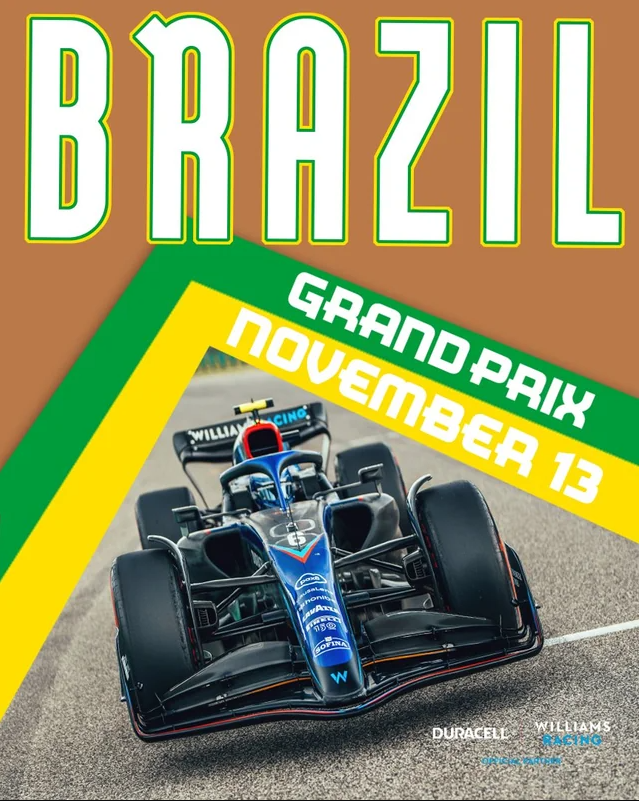
I have chosen this poster as my bad example of colour. This cover is promoting the Brazilian Grand Prix for the F1 team Williams. The title Brazil is presented with its main body is plain white but has green and yellow accents on the border of the letters, which symbolize the Brazilian flag’s colours. These colours are seen again as stripes to show the event and date. These vibrant colours go well together because they are both complementary colours. Rachel Nuwer (2012) says “Complementary colours are especially pleasing to the eye because different types of photoreceptor cells, which contribute to colour vision, perceive different types of light in the colour spectrum.” This then helps to attract people’s attention and look at the cover in more detail. The designer has made it difficult to read ‘November 13’ due to the shade of yellow chosen, as it clashes with the white text. The brown background stands out due to it not matching the vibrant colour scheme or complementing anything. This results in the background colour overpowering the rest of the colour, which does not look aesthetically pleasing and wouldn’t attract anybody’s attention.
My Adaptation.
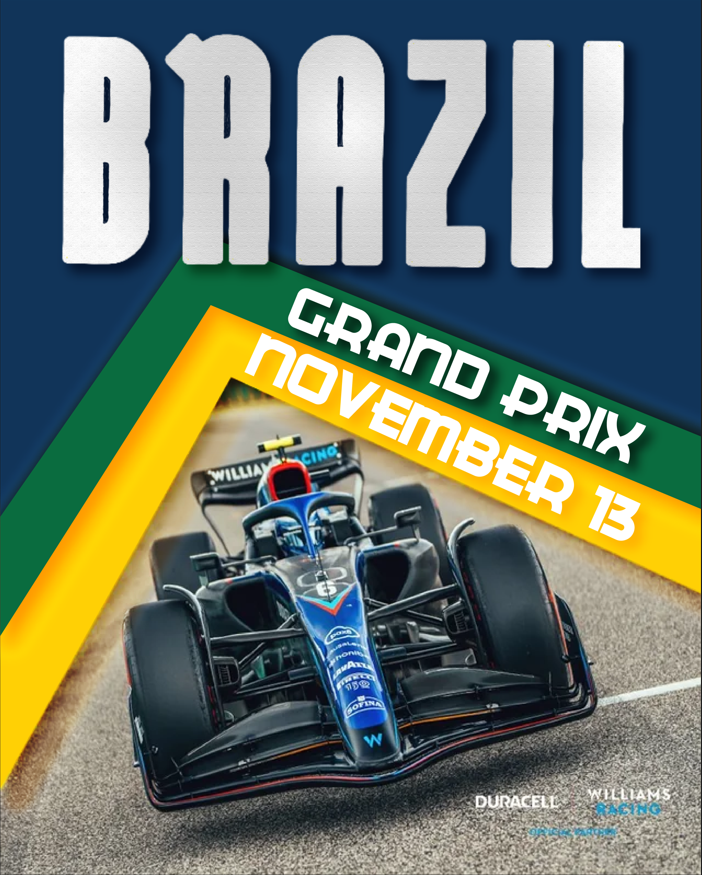
Moving onto my adaptation. The background colour has been changed to dark blue, which not only complements the green and yellow accents but also matches the blue theme of the car. The colour accents on the title didn’t look very professional so the letters were made thicker, and a chrome-style gradient paired with some texture was added. The yellow and green colours have slightly changed shade to make the text more readable. To ensure this I added colour drop shadows to the text, so the letters look 3D. To make the colour ribbons stand out more I also added an outer glow to them and dropped shadows. I think my adaptation looks a lot more modern and professional because it’s easier to read and the colours complement each other more.
References.
Grace Fussell (2023) – “association with progression and modernity also extends to brands that want to appear innovative and adventurous” https://design.tutsplus.com/articles/the-psychology-of-fonts–cms-34943
David Jonson (2023) – “grab attention and create a feeling of optimism. You can use warm colours to get a strong visual effect on the design.” “arouse cool and pleasant feelings in mind.” https://graphicdesigneye.com/importance-of-color-in-graphic-design/
Rachel Nuwer (2012) – “Complementary colours are especially pleasing to the eye because different types of photoreceptor cells, which contribute to colour vision, perceive different types of light in the colour spectrum.” https://www.smithsonianmag.com/smart-news/the-scientific-reason-complementary-colors-look-good-together-114030051/#:~:text=Science%20is%20at%20play.%20Complementary%20colors%20are%20especially,light%20in%20the%20color%20spectrum%2C%20Apartment%20Therapy%20explains.
British GP racing cover – https://pocketmags.com/gp-racing-magazine/july-2023
Brazil Williams cover – https://www.reddit.com/r/Formula1posters/comments/yv1ux0/williams_racing_x_duracell_poster_for_the_2022/