
The festival project will be a car show festival that will display current automobile models, concept cars and classics, and will provide attendees the opportunity to participate in car related activities. I will call the festival ‘HumberCarFest’ and it will be a local festival in Hessle, a town in the city Hull, England.
The usability goals for the festival will be about ensuring the attendees can easily navigate the event grounds, having access to information about different cars on display and engage in interactive activities.
Problem Space.
Ensuring an exceptional attendee experience is vital for the festival’s success. This involves providing diverse car displays, interactive activities e.g test drives, entertainment and socialising opportunities. Engaging with car clubs and sponsors is crucial as it would boost attendance. Providing incentives to exhibitors would help them participate enthusiastically. Essential infrastructure, such as parking and restroom facilities must be provided, along with ensuring compliance with regulations at a suitable local venue e.g Humber Bridge cark park. Marketing and promotion efforts are necessary to boost attendance and attract support from companies. Safety measures, including crowd control and medical assistance are very much needed. Financial management including budgeting and sponsorship agreements, is essential to maintain attendance levels. Additionally, considering the impact on the surrounding community, such as traffic congestion and environmental concerns is crucial for successful event planning.
Requirements Gathering and Analysis.
My audience ranges from teenagers to Middle aged adults, 15 to 50 because any individual that appreciates anything to do with automobiles and their inner workings is called a Car enthusiast.
Stakeholders:
- Car Manufacturers
- Car Dealerships
- Car Enthusiast Clubs
- Automotive Part suppliers
- Local Businesses
- Local Government/council and tourist boards
- Sponsors
- Attendees
- Car manufacturers may see success for them as having increased brand visibility, positive feedback on their displayed models and car sales generated from the festival. They might assume that showcasing their cars will potentially lead to higher sales and that the festival will attract a significant number of enthusiasts who are potential customers.
- Car Dealerships would likely consider success, increase in foot traffic to their dealerships, and converting potential customers into sales. They may assume that participating in the festival will allow them to reach potential customers and that showcasing a variety of cars will help attract potential buyers to their dealerships.
- Car Enthusiast Clubs’ recognition and appreciation for their members’ cars would be considered a success for them. As well as working opportunities with other enthusiasts and clubs. They may assume that the festival will attract a diverse range of cars and enthusiasts and opportunities to connect with other enthusiasts.
- Automotive part suppliers would see success in their increased sales, increased brand awareness and customer engagement with the brand during the festival. They may assume that participating will allow them to showcase their products to a targeted audience of car enthusiasts who are more likely to be interested in purchasing parts.
- Local Businesses might measure success by their increased revenue during the festival, any brand visibility and positive feedback from any festival attendees. Local businesses may assume that the festival will generate positive publicity for their businesses and the local area.
- Local government and Council/Tourist boards may consider success based on the increased tourism revenue they receive and the positive impact the festival has on the local economy. An enhanced reputation for the area as a host for automotive events would be considered success for them as well. They may assume the festival will attract tourists boosting revenue and assume the festival will be well managed and comply with relevant regulations and guidelines.
- Sponsors success would be assessed on their brand exposure and their ability to reach and engage with car enthusiasts effectively. They would assume that the festival would provide them with opportunities to engage with their target audience increasing brand exposure.
- Attendees’ success for attendees could be defined by the level of enjoyment and entertainment they experience at the festival, the variety and the quality of cars on display and the opportunities for meeting and socialising with fellow enthusiasts, as well as the overall value for money. Attendees may assume there will be a diverse range of cars and enjoyable activities which would enhance their experience.
Users Needs.
My users’ core needs in this space would be designated spaces and adequate parking for people that will drive to the festival, a simplistic but affective timetable with details on the next events, adequate toilet and waste facilities and fire and medical facilities. Other things that will be the users’ needs are things like food and drink stalls, clear map directions to the festival and a detailed coded map of the festival grounds so people know where to go. My users (the attendees) would consider success as having an enjoyable experience e.g seeing a range of cars and participating in activities. Attendees would also see success as value for their money, opportunities to socialise and make connections, and feel safe and comfortable throughout the festival.
Hierarchal Task Analysis.
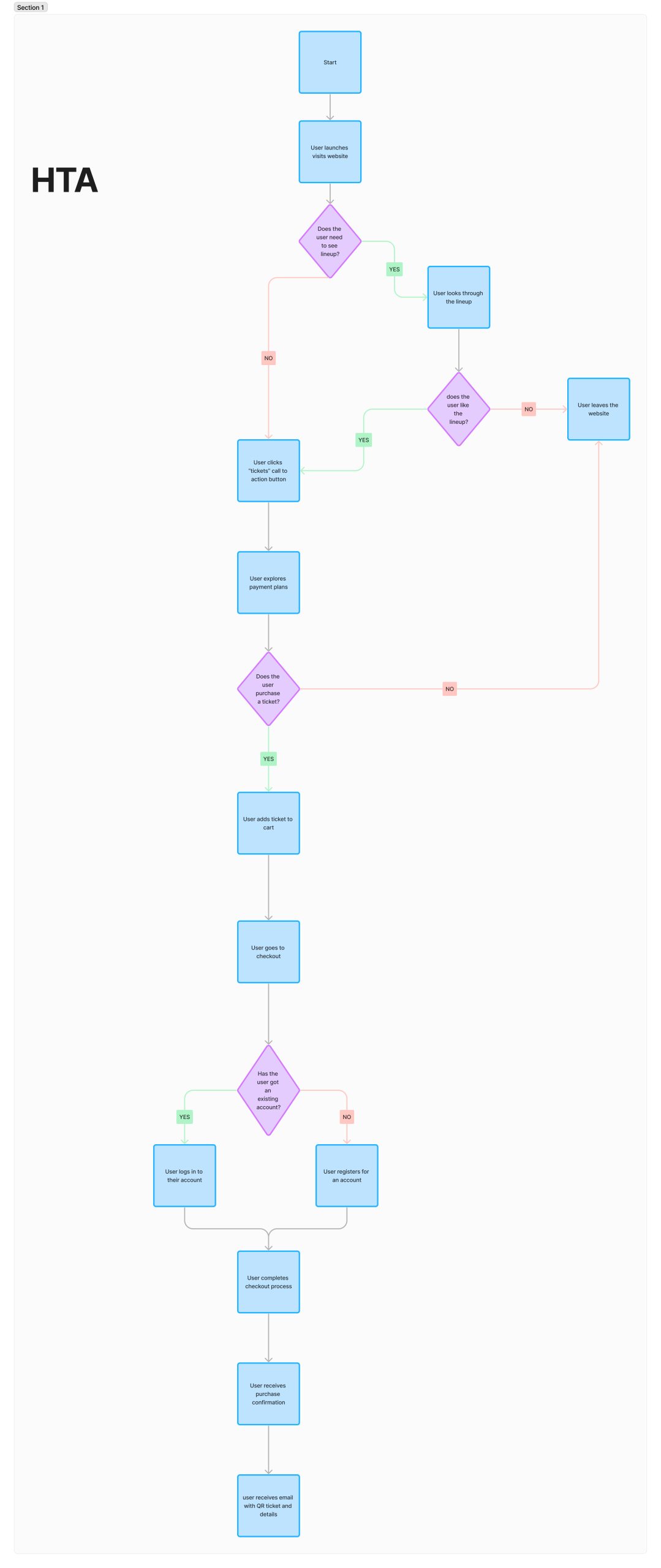
After exploring Reddit I reviewed people’s experiences of festivals like Leeds Festival and the Goodwood Festival of Speed.
Users said:
- Lots of food and drink vendors – expensive
- Parking was free, but it is really busy.
- (Goodwood) Supercar parking – people can see high end cars for free and owners have their cars protected more.
- (Goodwood) Lots of action areas e.g off road shows
- Plan your day in advance
- (Leeds) Keep as a group and have a meet up point
Accessibility Concerns.
Reddit also allowed me to gather user experiences of the festival websites and apps. One thing I found common across the festival websites is that there only seems to be a call-to-action button for tickets, so it makes it hard to find information on travel and accessibility information. Goodwood festival users also complained that there was no timetable for the festival events on the website, so people couldn’t plan their day in advance. My website would tackle that by having numerous calls to action buttons for tickets and travel information and will implement a timetable for the festival. I will also make my website more accessible for the visually impaired by providing a contrast in colours, limit the number of different colours in the interface and not relying on colour alone to communicate important information. The Leeds festival website is a good example of using accessible things like these.
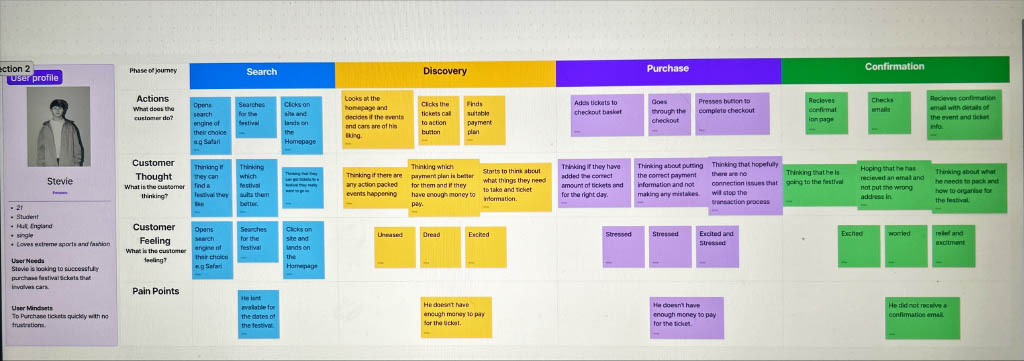
User Journey Map.
Personas.
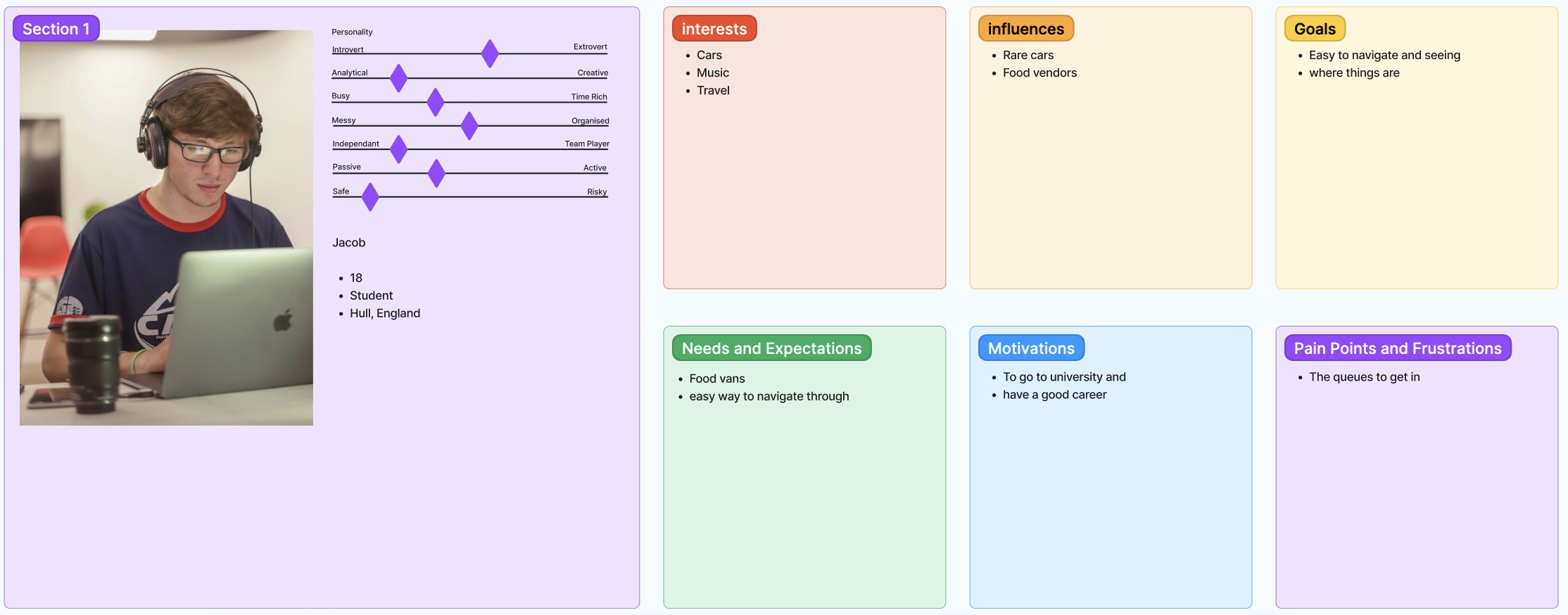
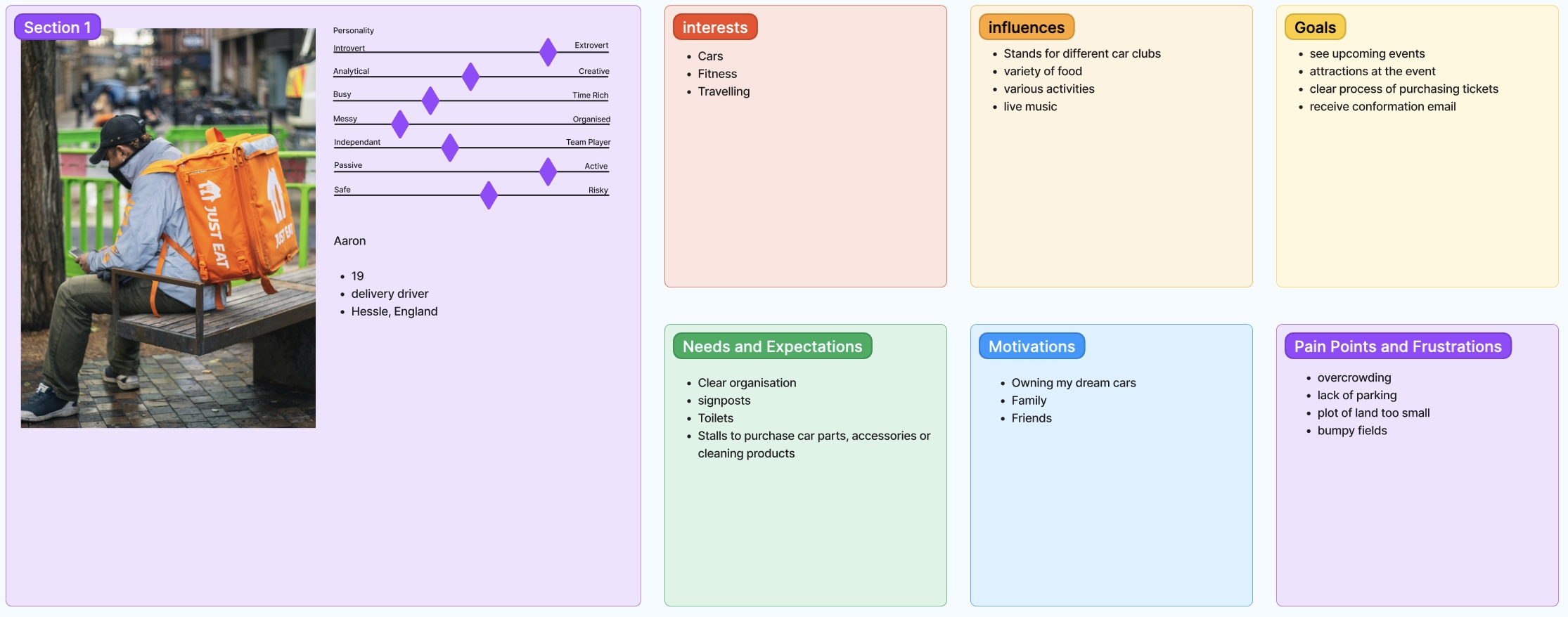
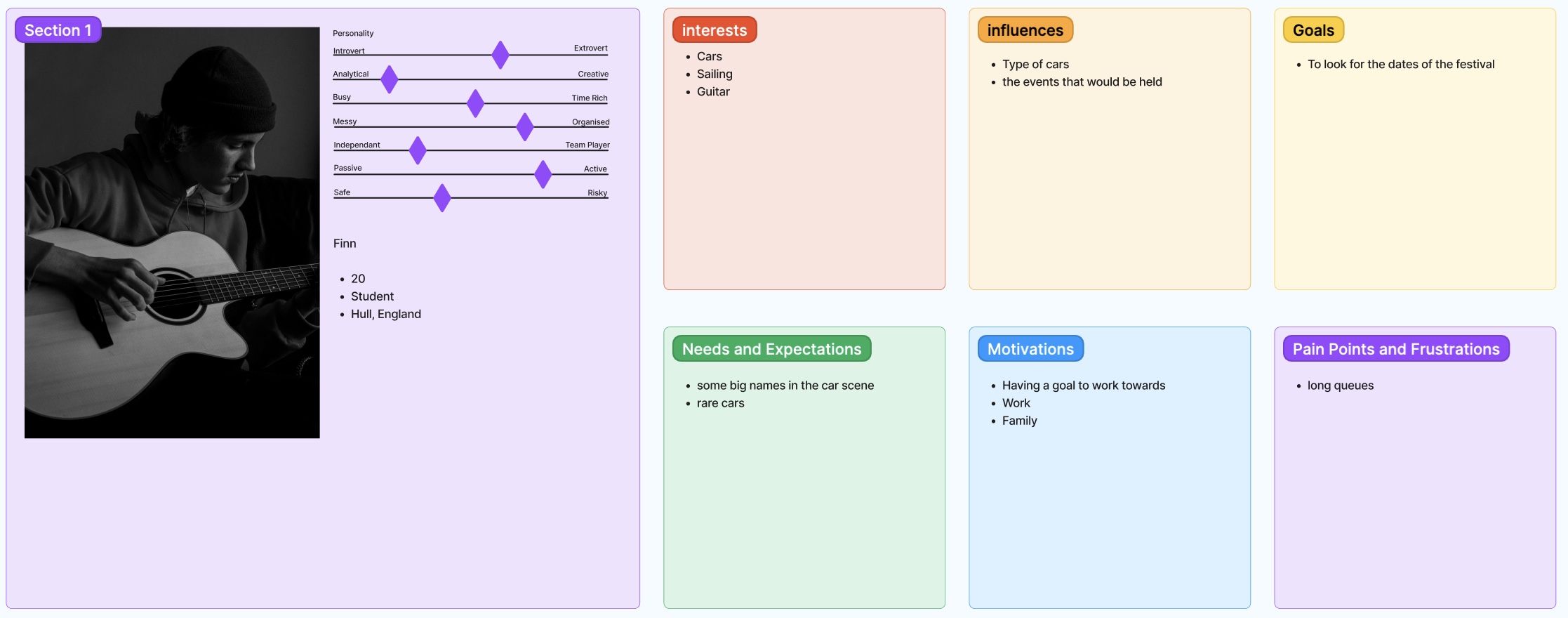
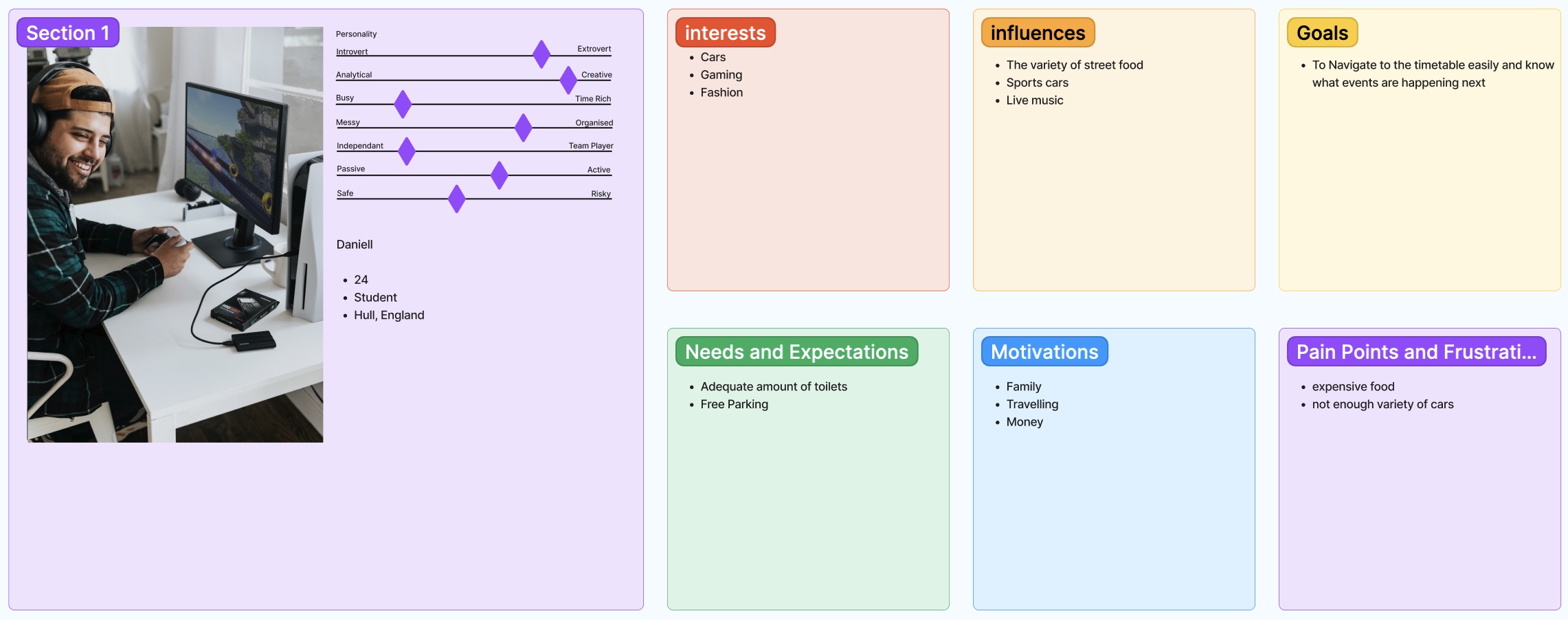
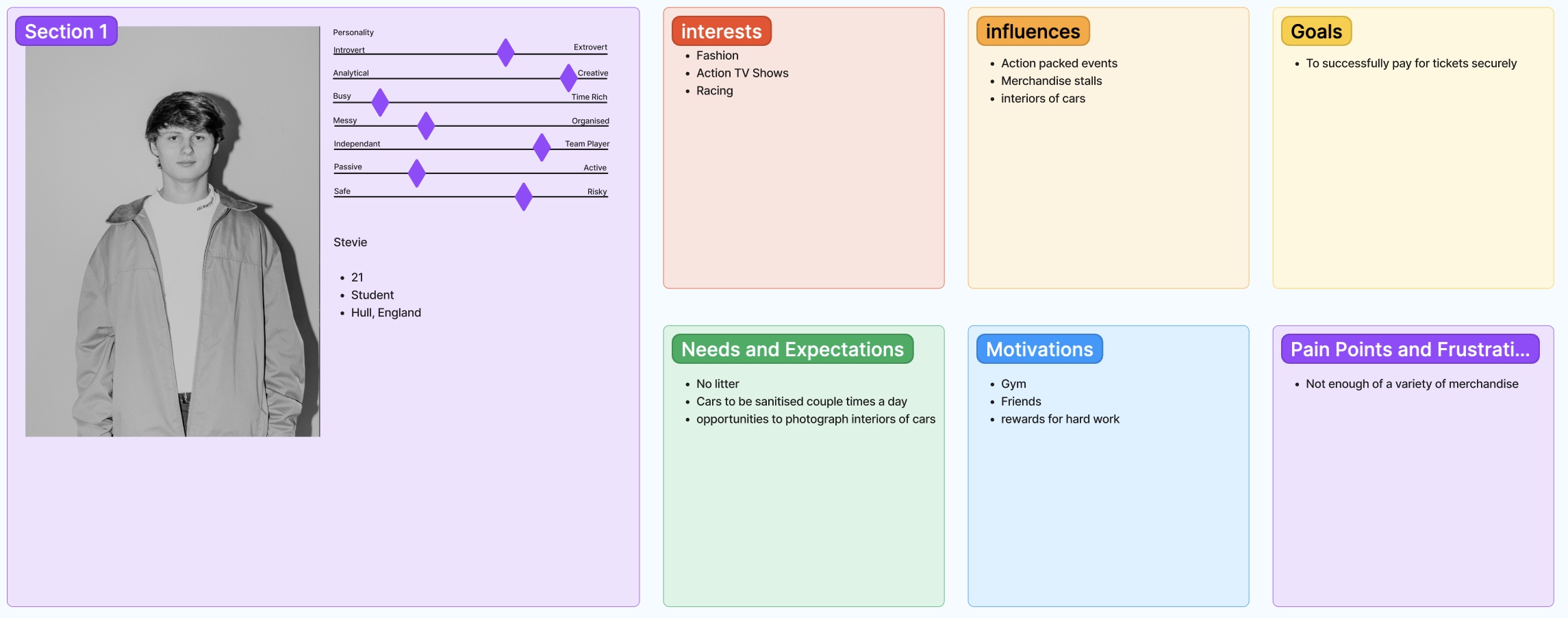
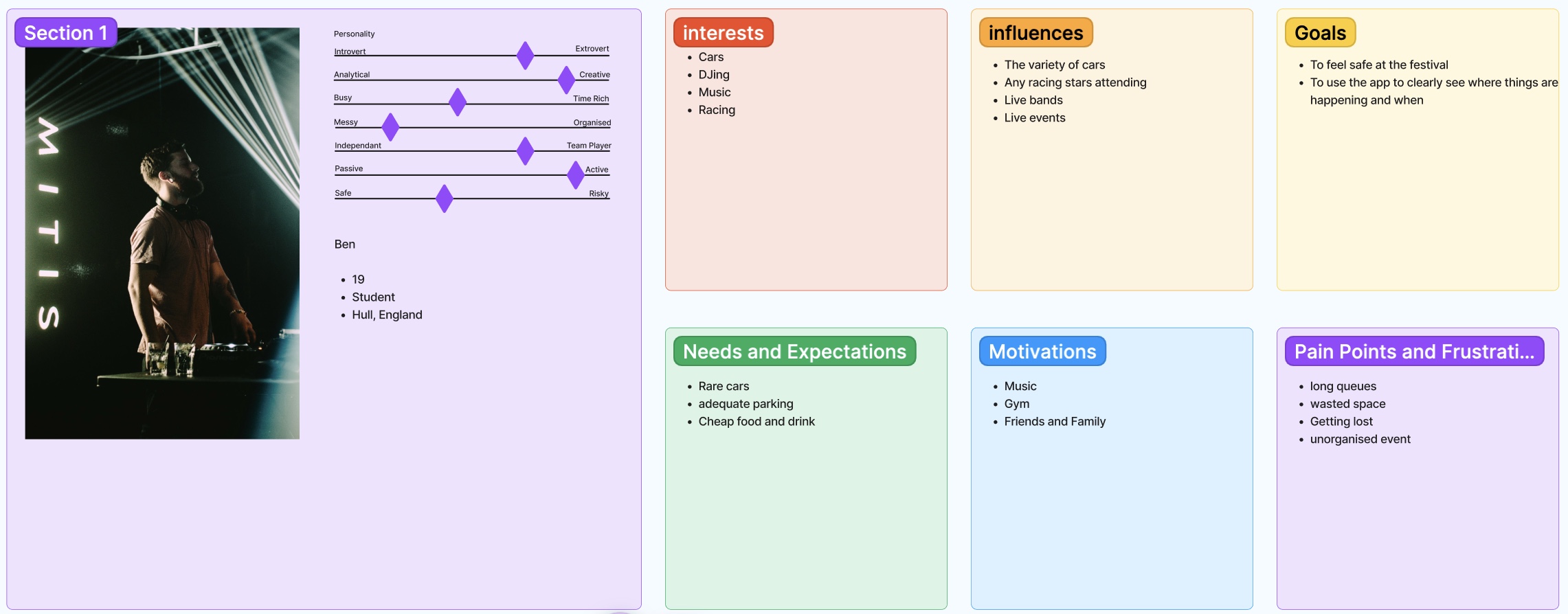
I want my designs success to look like a website/app that makes it an easy and stress-free process to buy tickets, from the homepage all the way to the checkout page. Success would result in visually impaired users having no problems when it came to viewing my website by e.g not relying on colour to communicate important information. People being able to have access to the timetable prior to the festival would also be a success.
My assumptions for my festival include that Car clubs and car manufacturers/dealerships bring automobiles to showcase, that the festival brings tourism into the town, and that there will be enough parking spaces and toilets for the attendees.
UI Principles Applied To My Design.
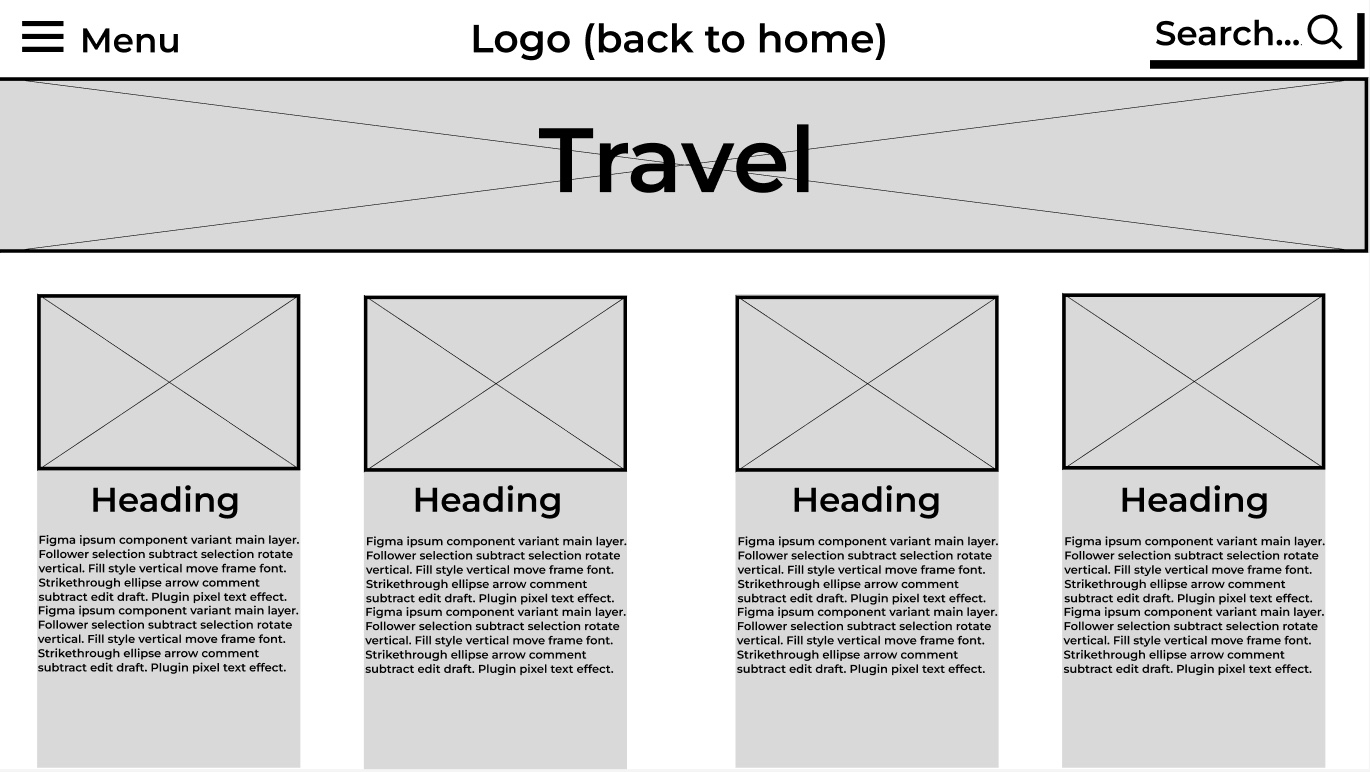
- One design law that will be applied to my design is the Law of Similarity. The website Laws of UX (2024) states “The human eye tends to perceive similar elements in a design as a complete picture, shape, or group, even if those elements are separated.” This means that my call-to-action buttons will all be the same shape to tell people that they will be directed to a different page. Fitts’s Law will also be in my Design. Laws of UX (2024) states “The time to acquire a target is a function of the distance to and size of the target.” This means my call-to-action buttons will be easy to see by making them distinguishable, so it helps all users find the call to actions efficiently.
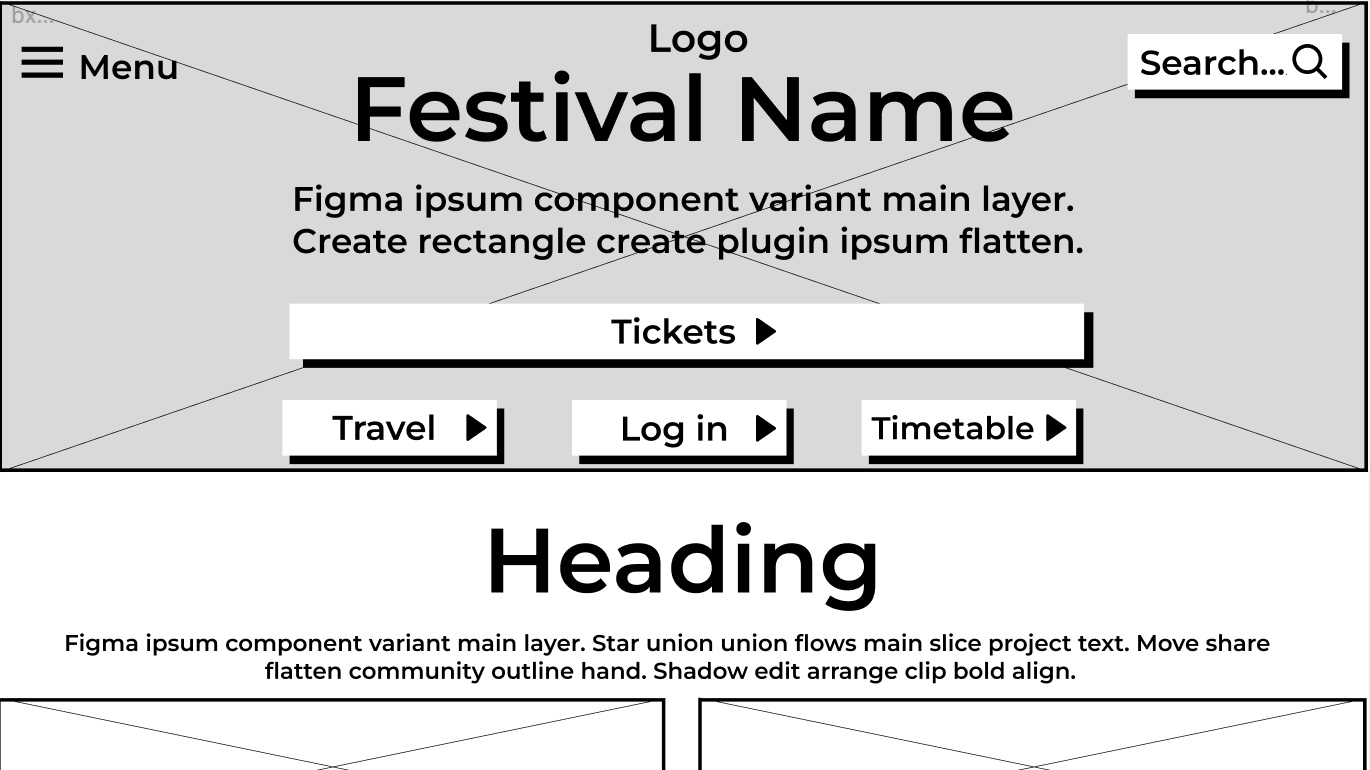
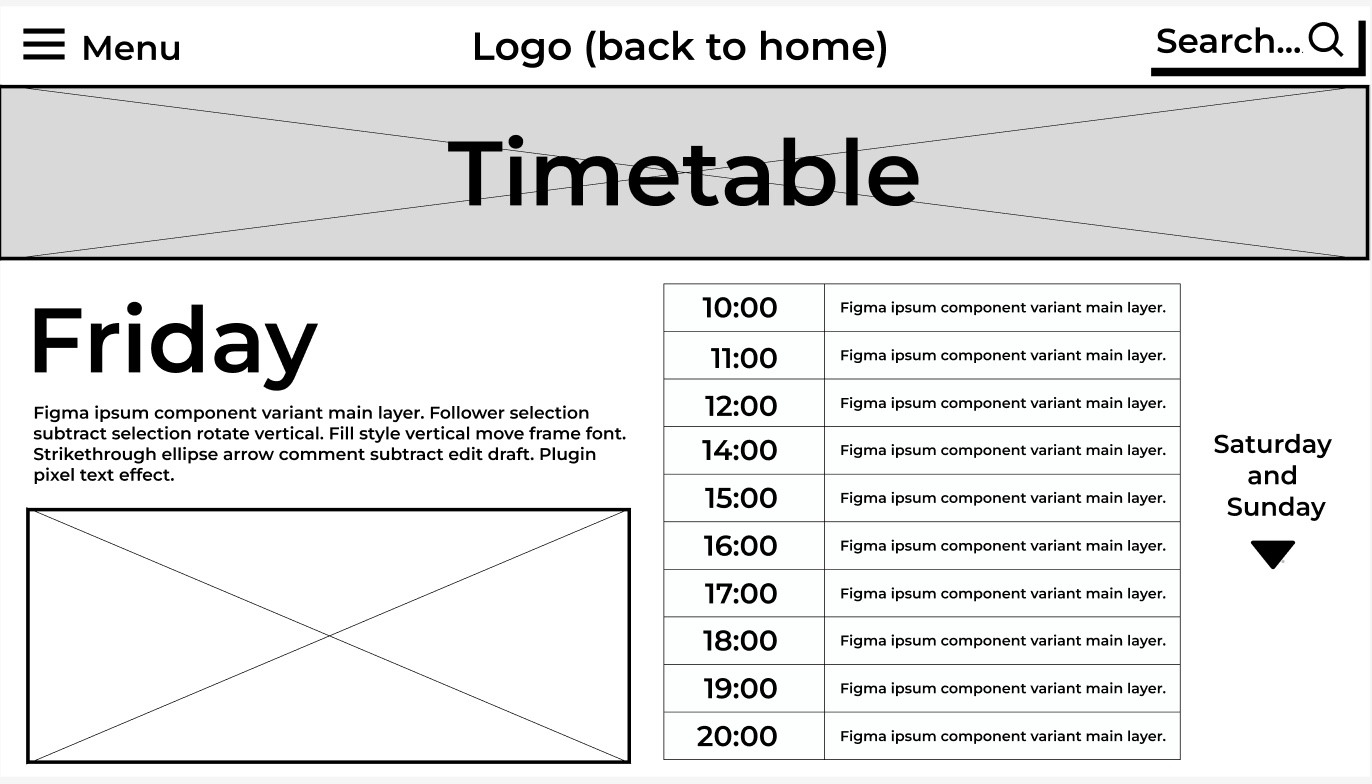
I can apply the festivals usability goals to the interface by including a timetable that will show information of what is on and where into the website and app, and having several call to action buttons to help users easily navigate through the grounds and the website/app.
- A feature will be included in my design that when the user hovers over a button, the colour changes, which will confirm to the user that it is a clickable button, and there will be a suttle animation for the visually impaired.
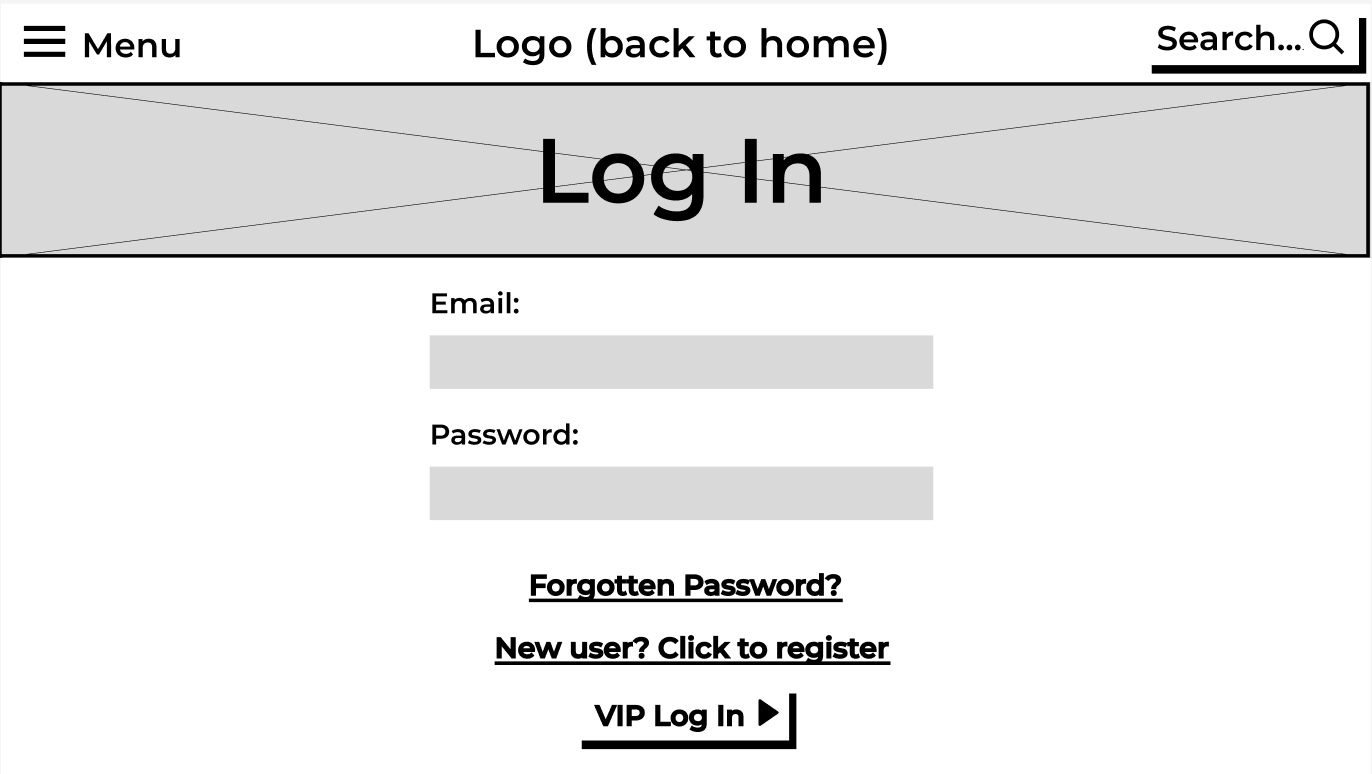
- There will be a Separate Log in page for attendees and the rest of the stakeholders. The rest of the stakeholders will be able to access things like updated blog posts and FAQs informing them about the festival from an exhibitor’s point of view. It will also give them access to a barcode to scan to get into the VIP and exhibitor only areas.
Rejected Design.
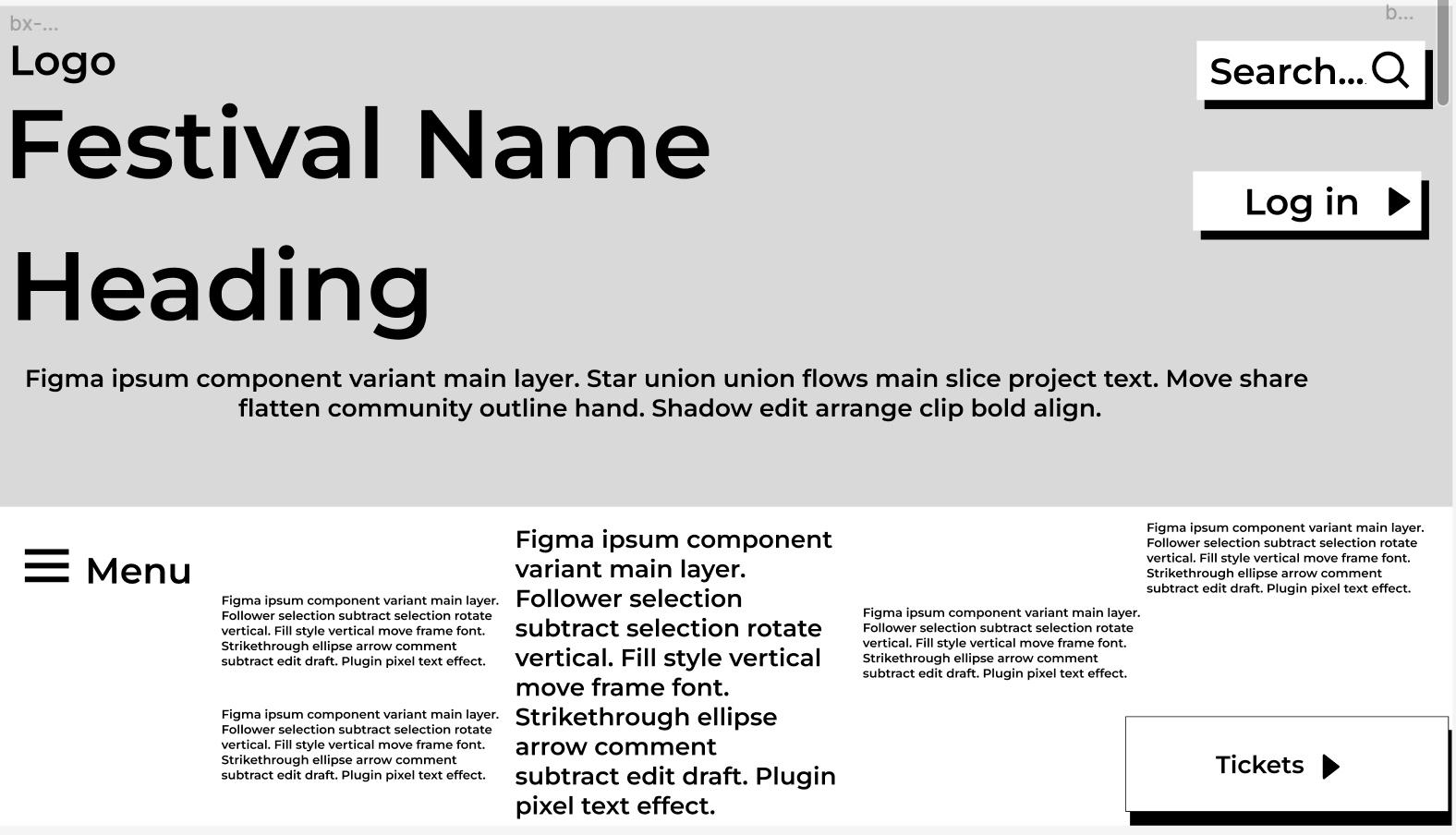
This was a rejected design because of a number of things. To start the ticket call-to-action button isn’t visible at the top of the website meaning some users may have to scroll down to find it, increasing purchase time. The website is full of text in random places and has no pictures which won’t grab the users attention. The menu button is also placed in a position that means the user has to scroll again to find it.
Low Fidelity – Website.
Low Fidelity – App.
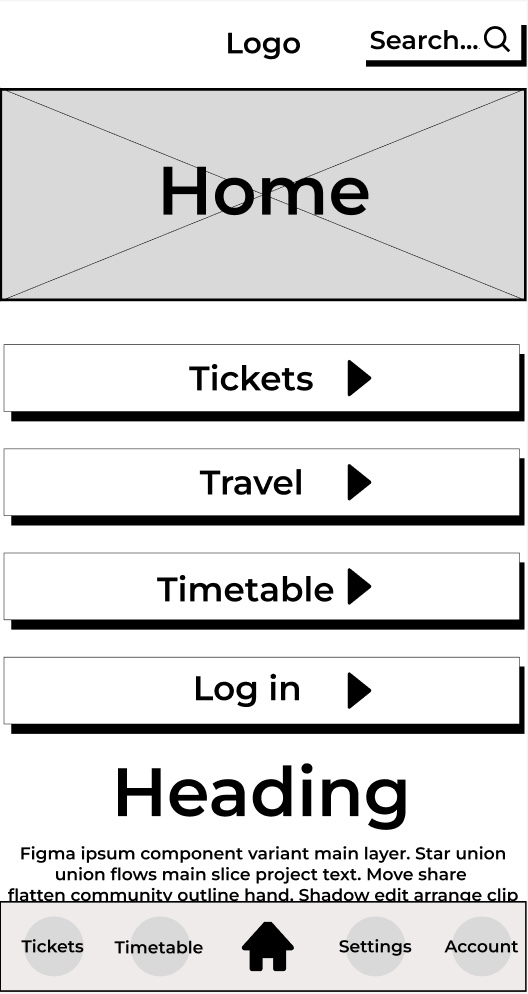
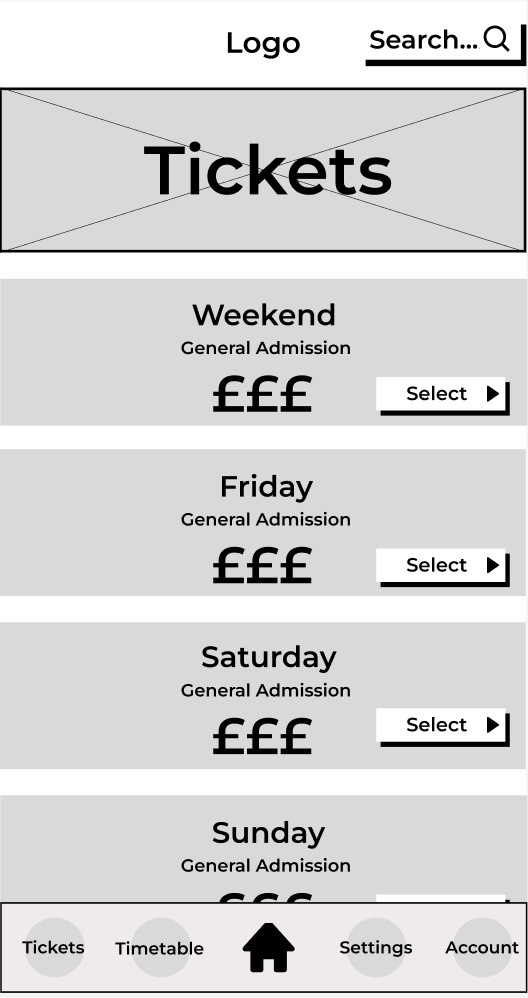
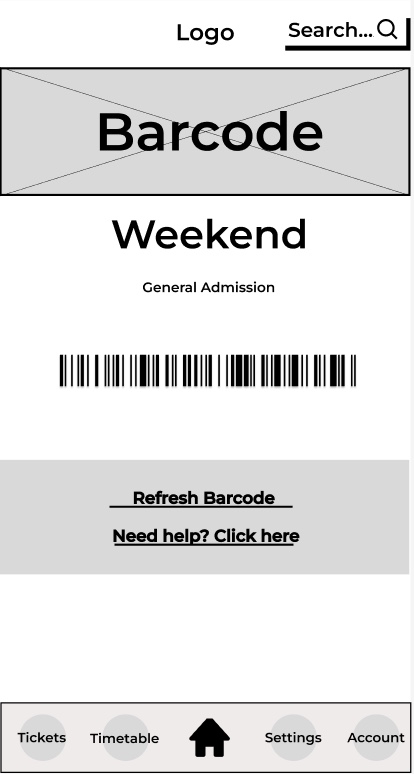
One constraint in my Low fidelity design is the fact that the call to action buttons are large and bold meaning they stand out to the user so it prevents them searching around the website endlessly to find the buttons increasing the amount of correct choices the user makes.
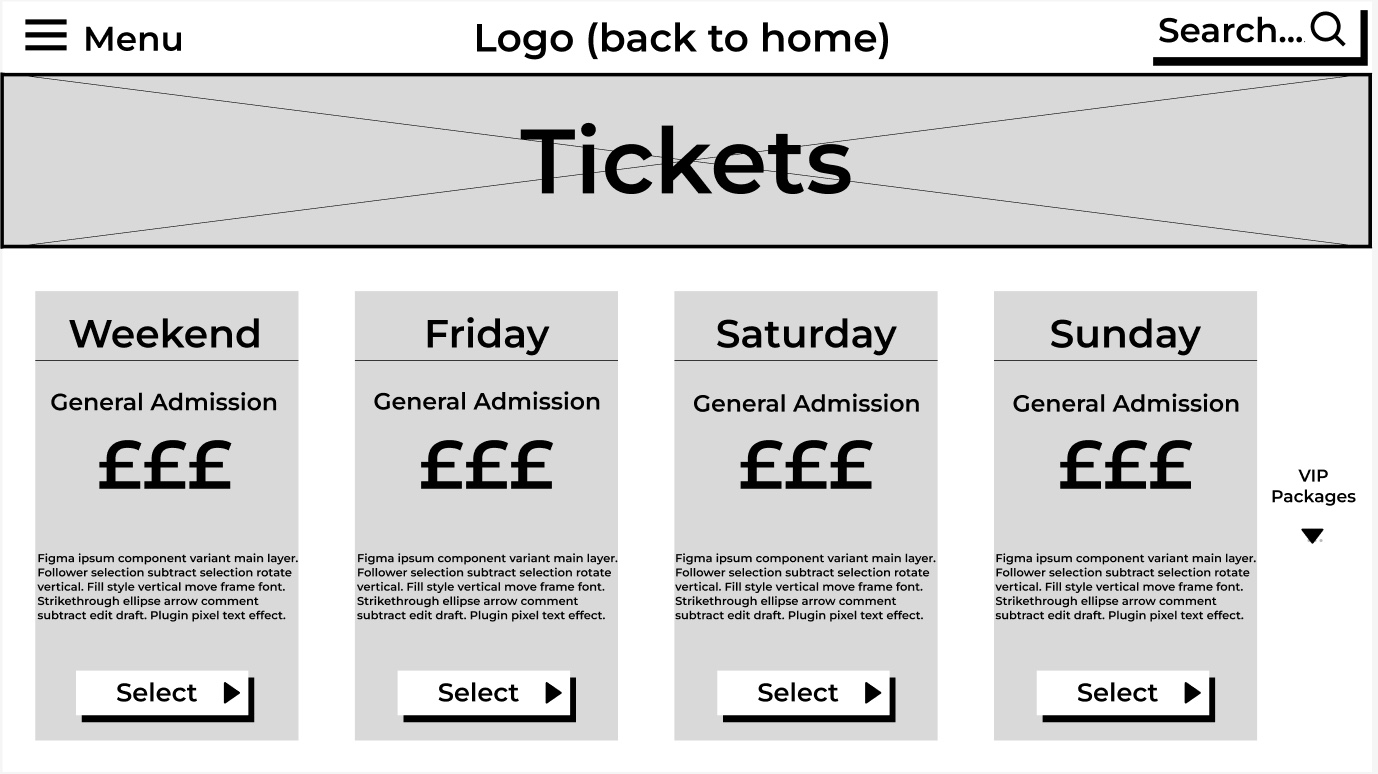
I have organised the call to action buttons together so the stakeholders have access to parts of the website with ease. The tickets page has a simplistic but affective layout with an instant price and with information underneath, to give the attendees (stakeholder) a good overview of what to expect. Stakeholders have a good overview of the Log in page as well because it allows the different types of stakeholders to use the VIP log in page.
References.
Fuzzy Math (accessibility concerns) – Accessed on 20.o2.24 Available at: https://fuzzymath.com/blog/improve-accessibility-for-visually-impaired-users/
Laws of UX (law of similarity & Fitts law) – Accessed on 02.03.24 Available at: https://lawsofux.com
Leeds Festival – Accessed 15.02.24 https://www.leedsfestival.com
Goodwood Festival of Speed – Accessed 15.02.24 https://www.goodwood.com/horseracing/qatar-goodwood-festival/?utm_source=google&utm_medium=cpc&utm_campaign=LS-PMax-QGF&utm_source=google&utm_campaign=21063621970&utm_medium=cpc&gad_source=1&gclid=EAIaIQobChMIv57TrL_dhAMVnI9QBh0rGgH8EAAYASAAEgJVpfD_BwE