The live design brief involved a collaboration with a UK-based company called eDecks, which specialises in the sale of decking, timber, fencing, and roofing products through its online platform. Known for catering to both amateur DIYers and professional landscapers, eDecks provides a wide range of outdoor improvement materials. The company operates primarily online and serves customers across the UK. This project was conducted in partnership with the Marketing students at the University of Hull, forming a cross-disciplinary collaboration between design and marketing.
The target audience identified by the marketing team includes UK homeowners aged 28 to 60, many of whom are invested in maintaining or improving their outdoor spaces. Within this broader group, three key customer groups were identified:
Gardeners – typically seeking decorative or functional enhancements to their gardens.
DIY Hobbyists – often interested in user-friendly, ready-to-install kits.
Small-scale Landscapers – looking for reliable supplies for residential jobs.
The purpose of the design brief was to reduce the seasonal sales slump by engaging customers year-round, encouraging them to continue planning and purchasing for their outdoor spaces even in the off-peak seasons. This aligns with the company’s broader goals of maintaining profitability and visibility throughout the entire year.
The marketing students proposed several key ideas to support this aim. One of their suggestions was the integration of an AI-based design tool into the eDecks website called Evergreen Design Bot. This interactive tool would allow users to visualise their outdoor spaces across different seasons, using eDecks products. For example, customers could upload a photo of their garden and see how it might look in winter, complete with decking, fencing, or lighting. This feature not only enhances the user experience but also encourages out-of-season purchases by helping customers envision year-round utility.
Additional ideas included the “How To” digital leaflets and engaging social media content to promote the new tool. Our design response to this brief involved creating visuals for these deliverables, designing a new homepage layout, and prototyping designs that would promote the AI tool’s features. Our work supported the marketing strategy by ensuring that the digital presentation was appealing, functional, and brand aligned.
3.) Project Development- Document your group’s developing design work and what you contributed (500 words plus visuals with captions)
Our group project centred on designing elements to advertise the AI tool the marketing team came up with whilst modernising the visual branding and digital presence of eDecks. This included a redesigned website, promotional banners, social media content, and how to leaflets. Our group worked collaboratively to divide tasks according to our strengths, resulting in a final outcome that reflects a fresh, user-friendly that promotes the new Evergreen AI tool at a professional standard.
A key example of graphic design for good from the post-war period is the visual identity created by Otl Aicher for the 1972 Munich Olympics. What makes this project so important is not just how clean and modern it looks, but what it was trying to achieve socially and politically.
After the Second World War, Germany needed to rebuild its international reputation. The 1972 Olympics gave West Germany the chance to present itself as peaceful, democratic, and forward-thinking. Aicher’s design played a big role in shaping that message. Instead of using heavy national symbols, he created a calm, clear and structured visual system that felt open and accessible.
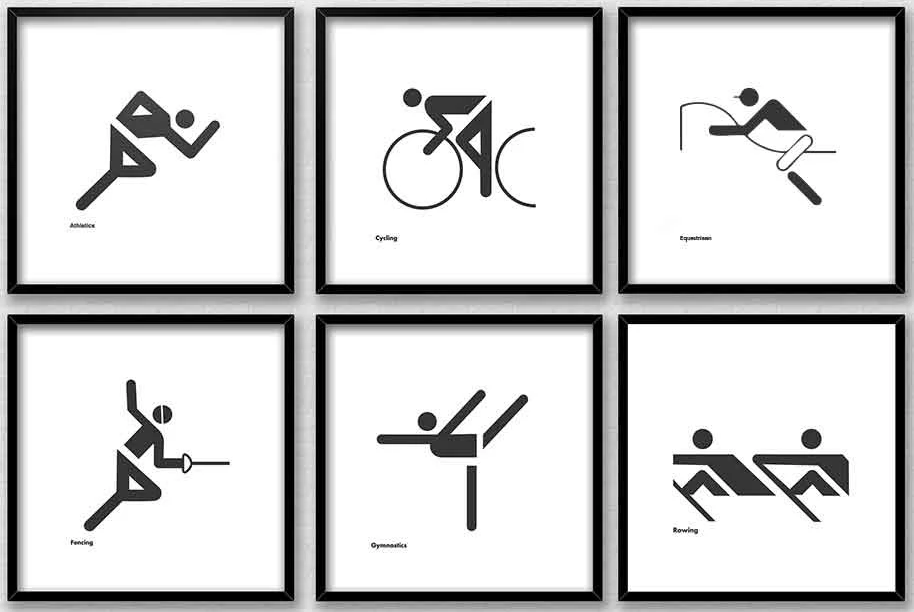
Example of Aicher’s Pictograms
The pictograms are probably the most recognisable part of the project. Aicher designed simple icons to represent each sport. They didn’t rely on language, which meant they could be understood by visitors from all over the world. This is where the idea of “design for good” becomes clear as the system made the Games easier to navigate and more inclusive. It showed how graphic design can remove barriers rather than create them.
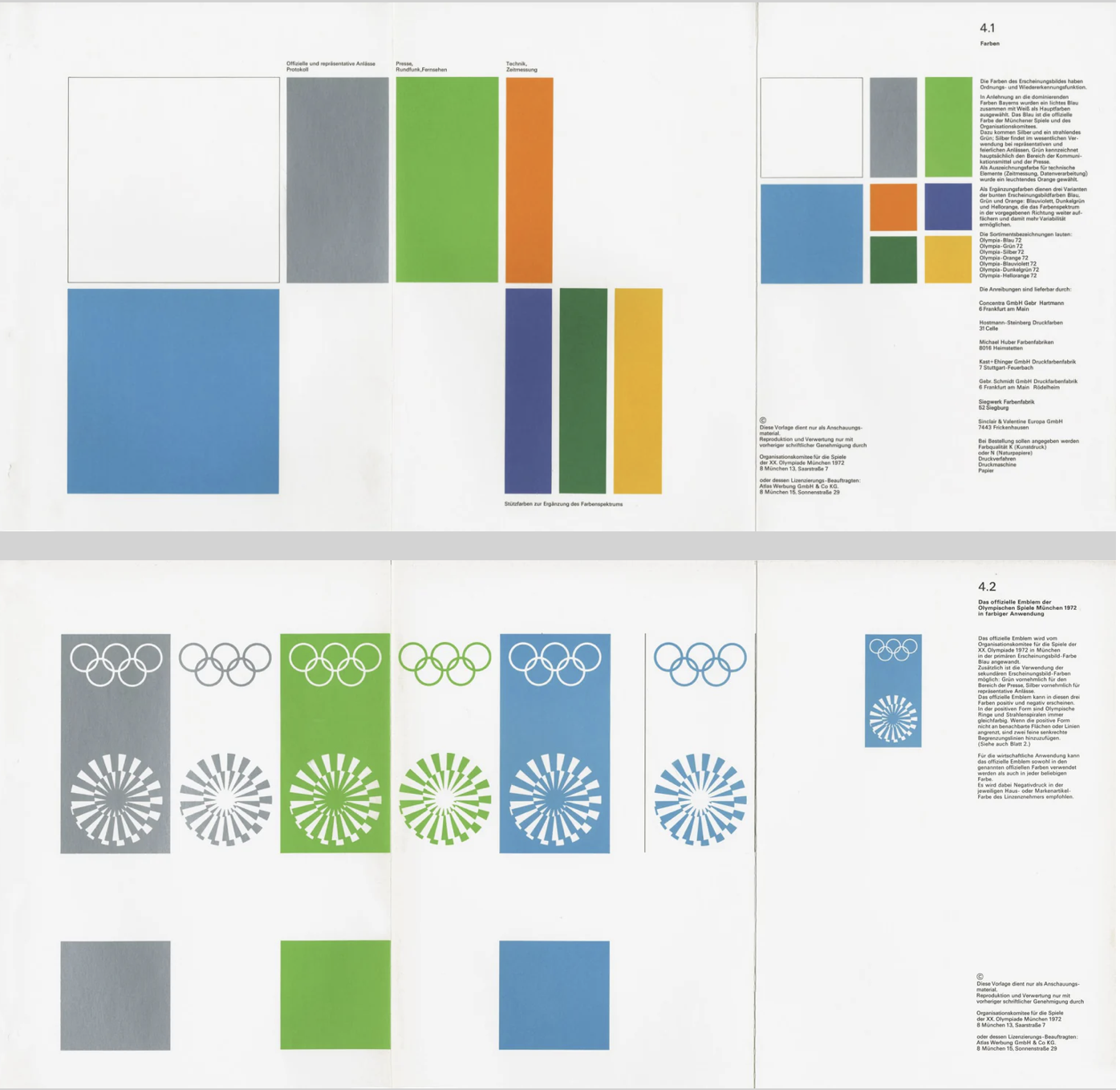
Guidelines and Standards for the Olympiad Munich 1972
Colour choices were also meaningful. Aicher avoided red and black because of their connection to Germany’s Nazi past. Instead, he used light blues and greens, which created a softer and more optimistic atmosphere. This wasn’t just an aesthetic choice but a conscious decision to distance modern Germany from its history. In that sense, the design helped reshape how the country was seen internationally.
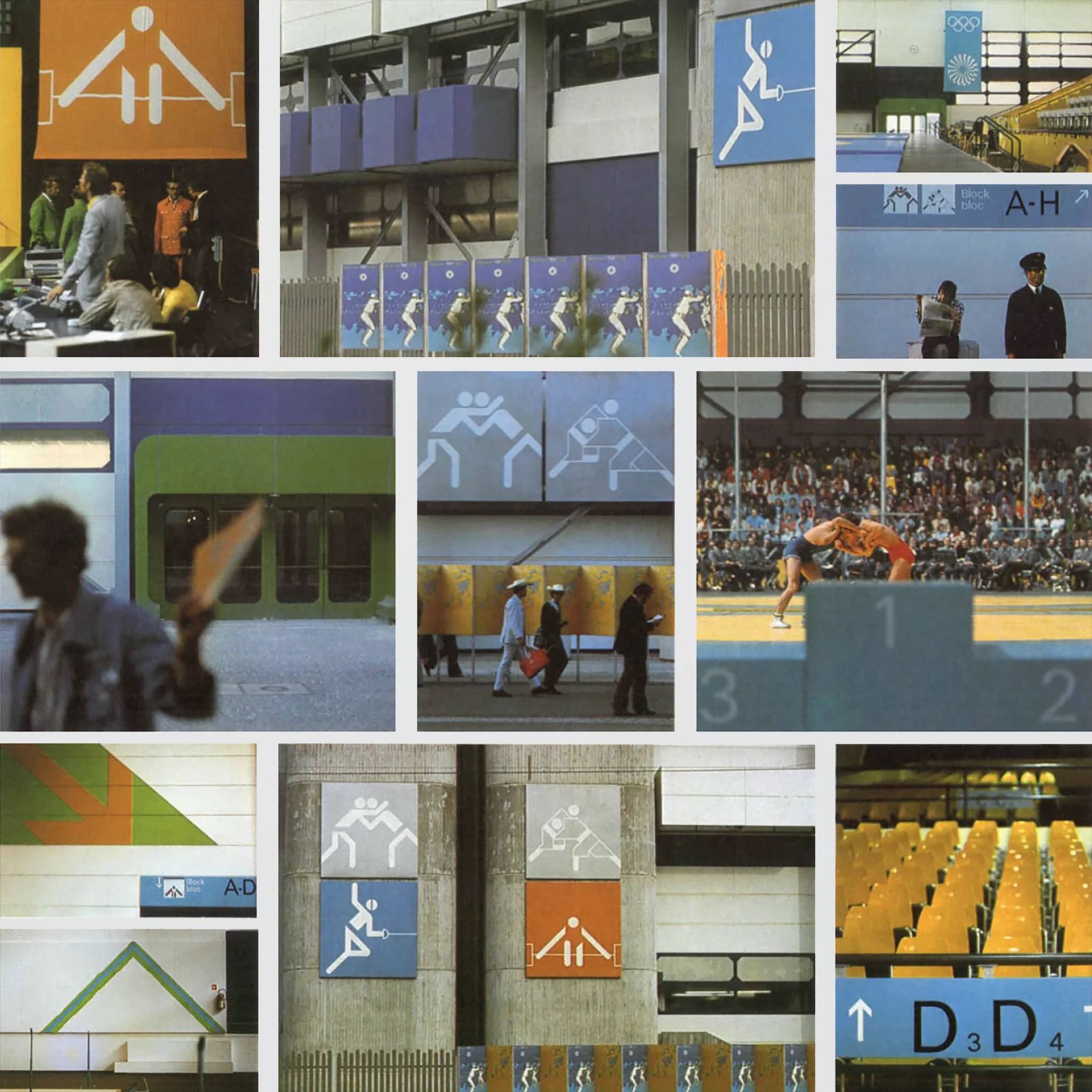
Another important factor was consistency. Aicher developed strict guidelines so that everything including posters, tickets and signage followed the same visual language. This created clarity and trust. The project influenced how major events and public spaces are designed even today, especially in areas like wayfinding and branding systems.
Aicher’s work on different media
Even though the Games were overshadowed by tragedy, Aicher’s design still stands as an example of how graphic communication can have real societal impact. It helped reposition a nation and promote democratic values through visual means.
For me, this shows that post-war graphic design wasn’t just about style. It became a tool for rebuilding identity and encouraging openness. That’s what makes it a strong example of design for good.
Task 2: The Climate Clock
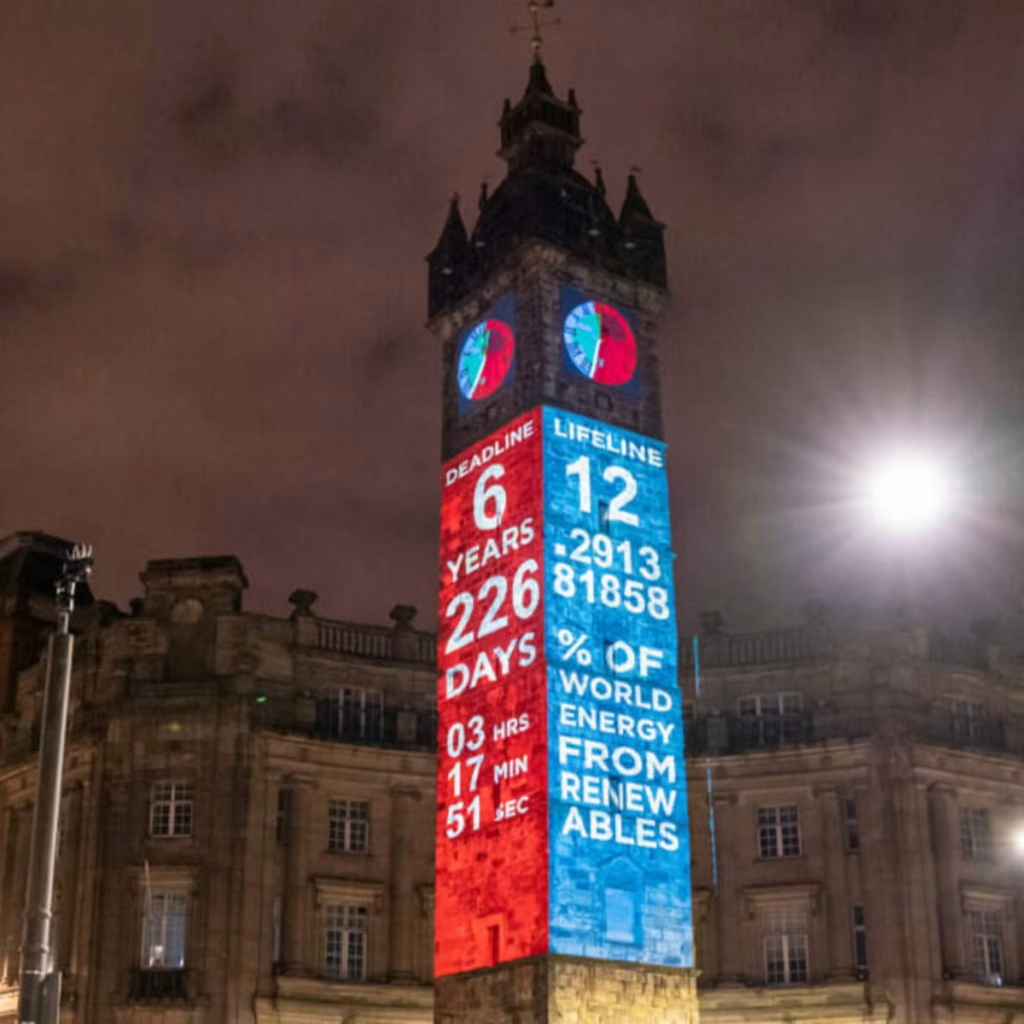
A contemporary example of graphic design for good is The Climate Clock, first launched in 2020 by Gan Golan and Andrew Boyd. The project displays a live digital countdown showing how much time remains to limit global warming before reaching critical levels. What makes it effective is how it turns data into something visual, immediate, and emotionally powerful.
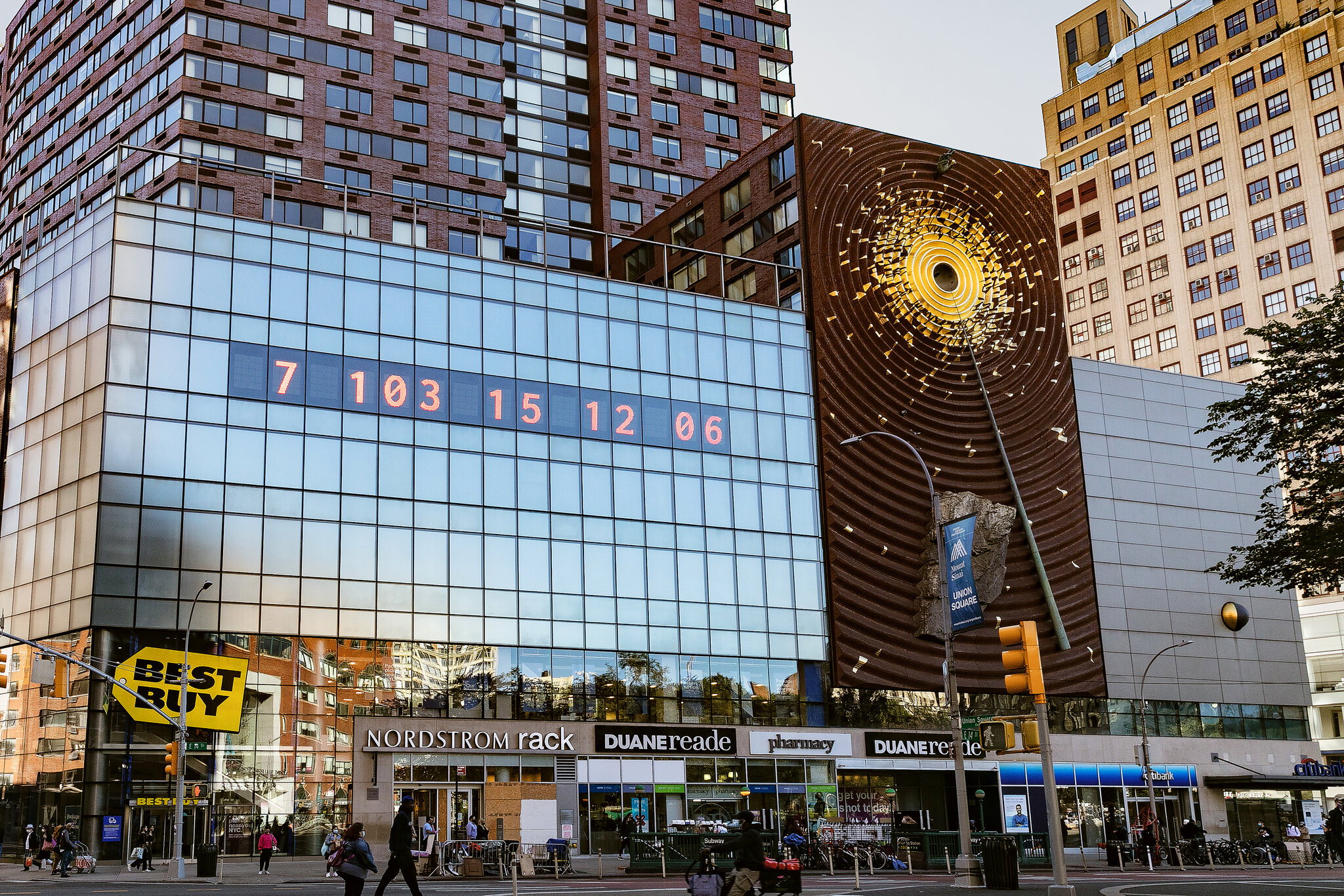
New York Climate Clock
The first clock was installed in New York City in Union Square. Large, bold numbers were projected onto the side of a building, counting down in real time. The design is extremely simple with just typography and numbers, but that simplicity is what gives it impact. There are no distracting images or complicated explanations. The message is direct, that time is running out.
Although it appears to be an installation of public art, it functions as contemporary graphic design. It uses typography, scale, hierarchy, and digital display systems to communicate information clearly in a public space. This reflects how graphic communication has expanded beyond print into technological and interactive environments. Instead of sitting on a page, the design occupies urban space and demands attention.
What makes The Climate Clock a clear example of design for good is its purpose. It’s not selling a product or promoting a brand. It Instead translates climate science into a format that anyone can understand instantly. Climate reports can feel foreign and distant to most people, but a countdown creates a sense of urgency. Watching the seconds decrease makes the issue feel real and time sensitive. In that sense, the design bridges the gap between scientific data and public awareness.
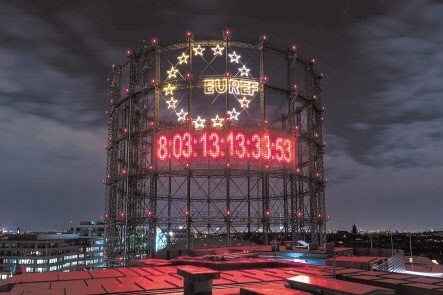
Berlin Climate ClockGlasgow Climate Clock
Technology is central to its impact. The clock runs using up-to-date climate data, meaning the numbers are constantly changing. This reinforces the idea that the crisis is ongoing. The project has also been replicated in cities around the world and widely shared online, showing how contemporary graphic design operates across both physical and digital platforms. Social media has helped the clock become a recognisable symbol of climate urgency.
In terms of societal impact, The Climate Clock has contributed to keeping climate change in public conversation. It has appeared in protests, educational discussions, and media coverage. While it does not directly create policy change, it influences how people think about the issue and encourages collective responsibility.
The Climate Clock shows how graphic design today can move beyond aesthetics and become a form of public communication. Through bold typography and real-time data, it makes an invisible crisis visible. This is what makes it a strong example of contemporary design for good.
Task 3: Collaborative Workshop
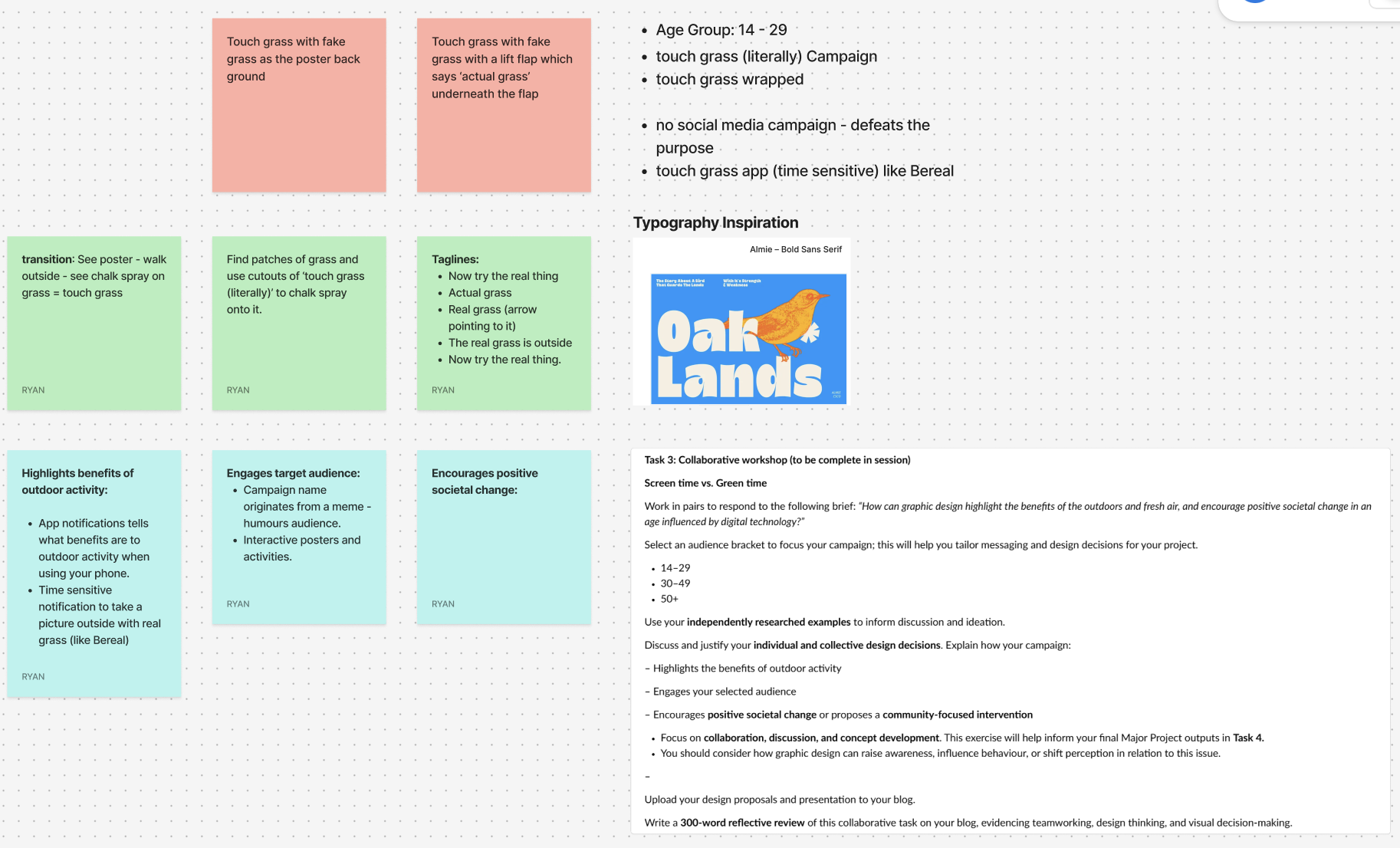
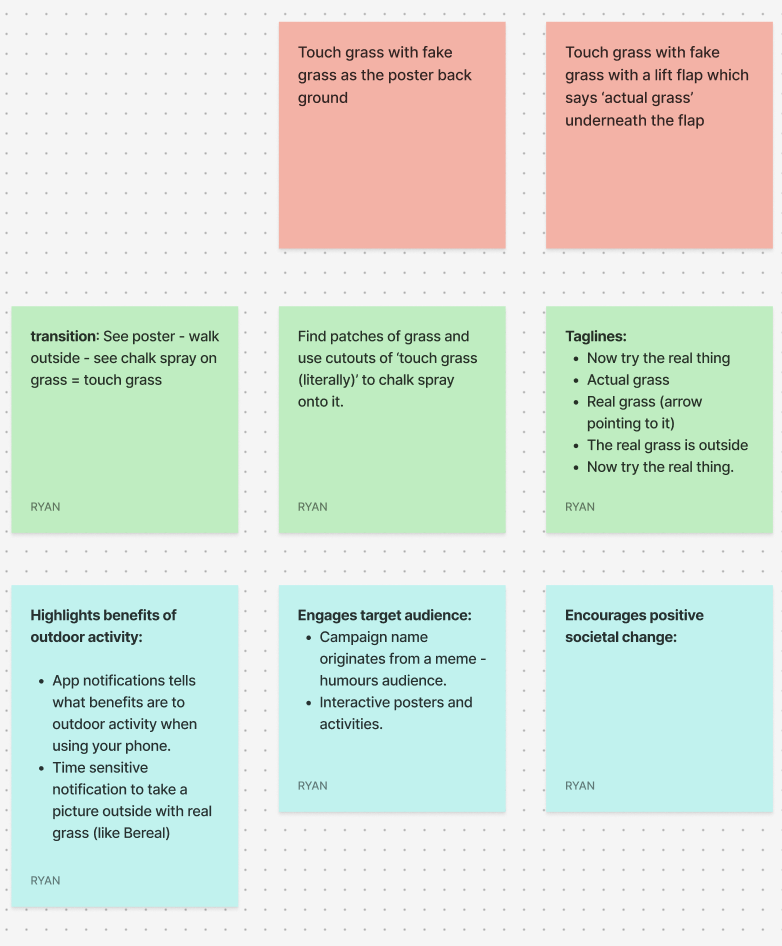
For the collaborative workshop, Jess and I worked together using Figma and a FigJam board to brainstorm ideas. We decided to focus on the 14–29 age group, as this audience is heavily influenced by digital culture, gaming, and social media. We wanted to create something that would feel relevant and humorous as this would be highly effective with the age group.
Our campaign idea is called “Touch Grass (Literally)” and is inspired by the popular online phrase “go touch grass.” Instead of using it negatively, we plan to reframe it in a playful way to encourage people to actually step outside. The humour comes from taking the phrase literally and turning it into a real-world action.
One of our main ideas is to design interactive posters backed with fake grass, so when someone touches the poster, they are physically engaging with the message. The tagline could include phrases like “Now try the real thing” or “The real grass is outside,” with an arrow directing people toward nearby green spaces. We also discussed using environmentally friendly chalk spray to stencil “Touch Grass (Literally)” onto existing patches of grass in public areas to guide people outdoors.
To support this, we plan on creating a time-sensitive app similar to BeReal. The app would send random notifications prompting users to go outside and take a photo touching real grass. It would also provide small reminders about the benefits of fresh air and outdoor activity.
Subject, Audience & Purpose- Describe the Live Design Brief and include general background research about your chosen subject, audience, and purpose (500 words plus visuals with captions)
eDecks Logo
The live design brief involved a collaboration with a UK-based company called eDecks, which specialises in the sale of decking, timber, fencing, and roofing products through its online platform. Known for catering to both amateur DIYers and professional landscapers, eDecks provides a wide range of outdoor improvement materials. The company operates primarily online and serves customers across the UK. This project was conducted in partnership with the Marketing students at the University of Hull, forming a cross-disciplinary collaboration between design and marketing.
The marketing students were tasked with developing an innovative Integrated Marketing Communications (IMC) Campaign to address a commercial challenge faced by eDecks: the seasonal drop-off in sales during the colder months. Traditionally, the company sees strong performance in spring and summer when customers are more inclined to invest in outdoor projects. However, sales significantly decline in autumn and winter, resulting in reduced revenue during half the year. Our job, as graphic design students, was to support the marketing concepts visually and creatively, translating the campaign strategies into digital content and user interface elements. Our role involved applying UX/UI design principles, visual communication skills, and branding strategies to bring their campaign to life on a practical level.
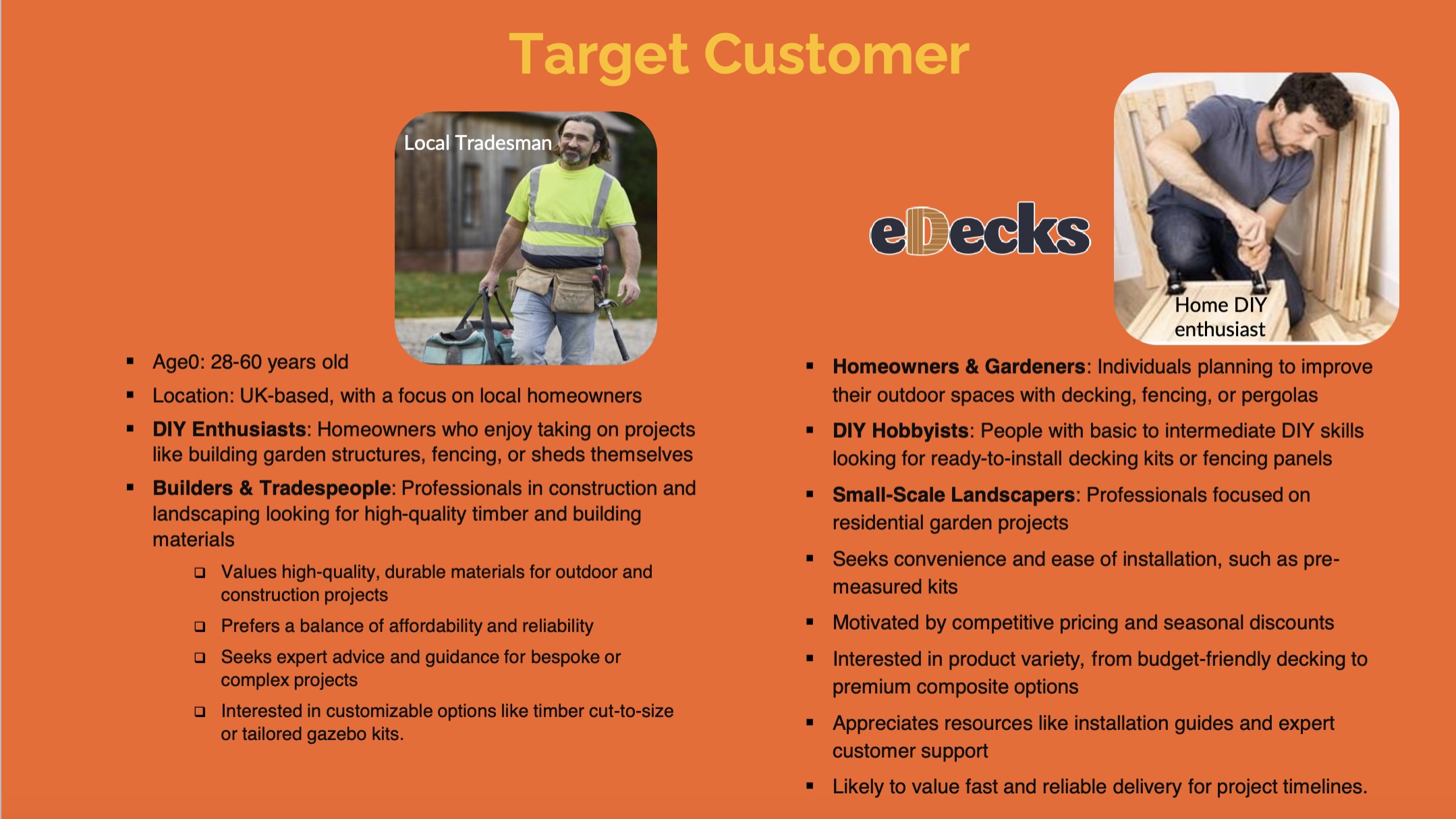
target customer slide from eDecks brief
The target audience identified by the marketing team includes UK homeowners aged 28 to 60, many of whom are invested in maintaining or improving their outdoor spaces. Within this broader group, three key customer groups were identified:
Gardeners – typically seeking decorative or functional enhancements to their gardens.
DIY Hobbyists – often interested in user-friendly, ready-to-install kits.
Small-scale Landscapers – looking for reliable supplies for residential jobs.
The purpose of the design brief was to reduce the seasonal sales slump by engaging customers year-round, encouraging them to continue planning and purchasing for their outdoor spaces even in the off-peak seasons. This aligns with the company’s broader goals of maintaining profitability and visibility throughout the entire year.
The marketing students proposed several key ideas to support this aim. One of their suggestions was the integration of an AI-based design tool into the eDecks website called Evergreen Design Bot. This interactive tool would allow users to visualise their outdoor spaces across different seasons, using eDecks products. For example, customers could upload a photo of their garden and see how it might look in winter, complete with decking, fencing, or lighting. This feature not only enhances the user experience but also encourages out-of-season purchases by helping customers envision year-round utility.
Additional ideas included the “How To” digital leaflets and engaging social media content to promote the new tool. Our design response to this brief involved creating visuals for these deliverables, designing a new homepage layout, and prototyping designs that would promote the AI tool’s features. Our work supported the marketing strategy by ensuring that the digital presentation was appealing, functional, and brand aligned.
2.) Relevant Design History- Include at least three examples related to your Live Design Brief and analyse them. How have they influenced your final presentation? (500 words plus visuals with captions)
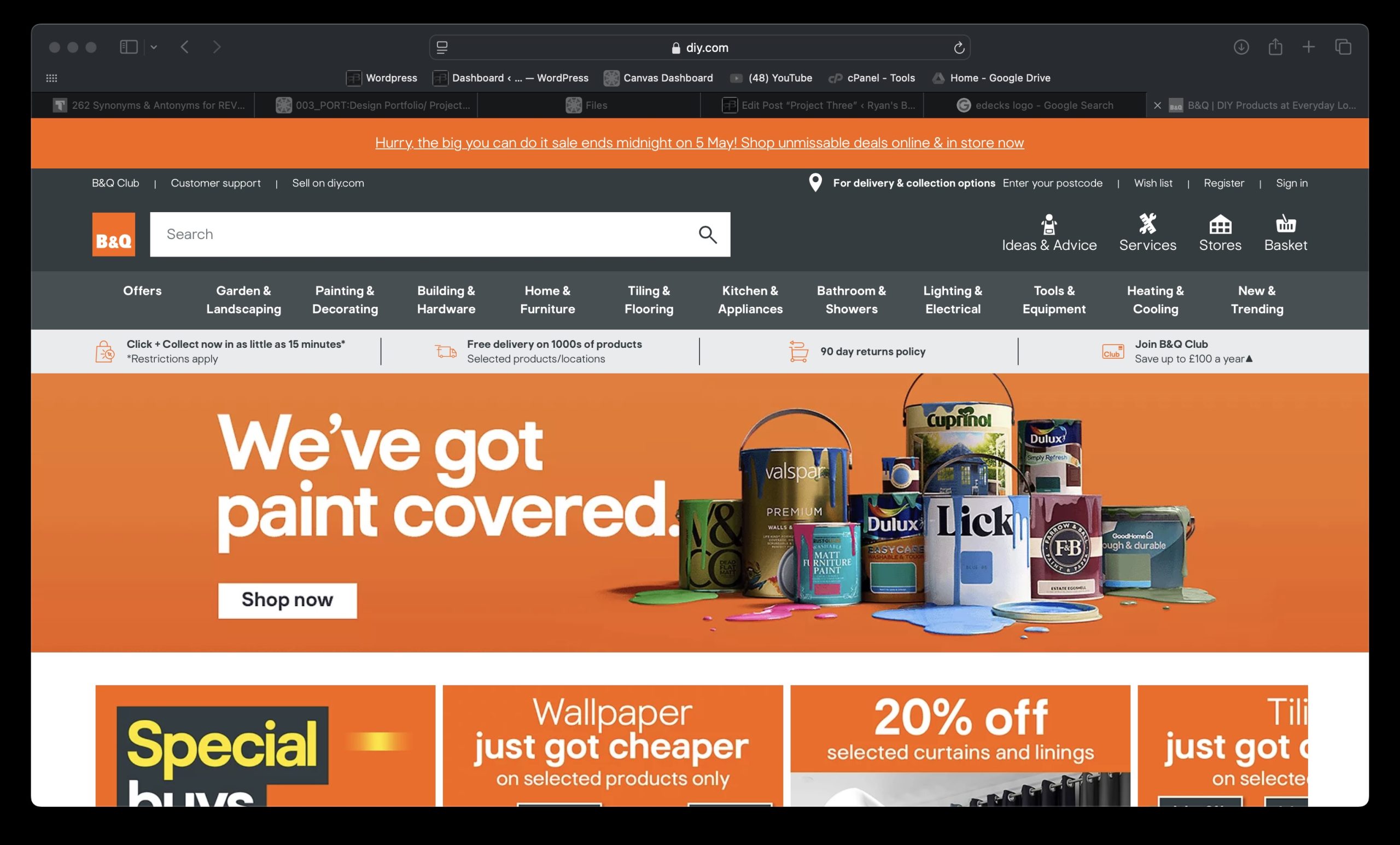
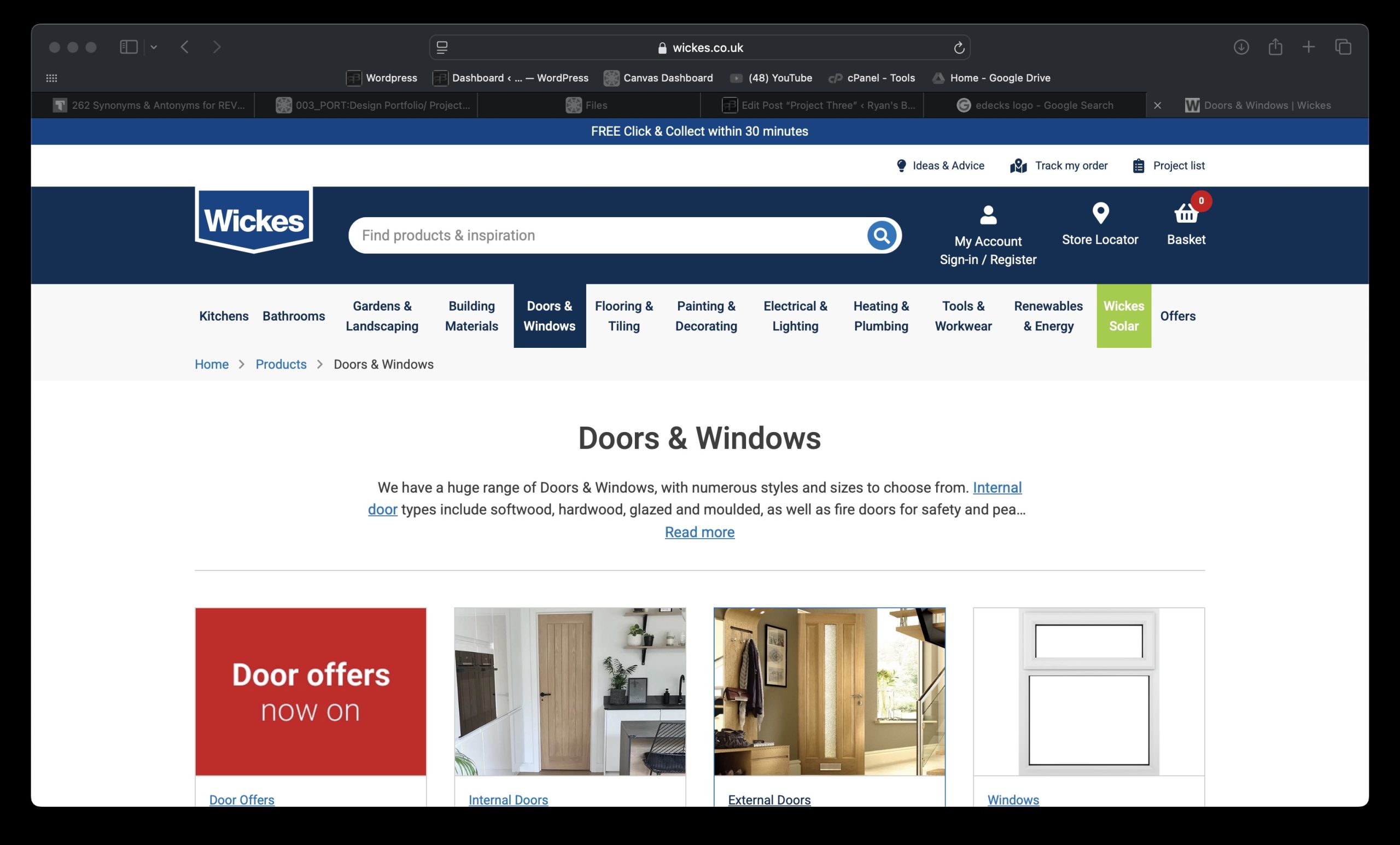
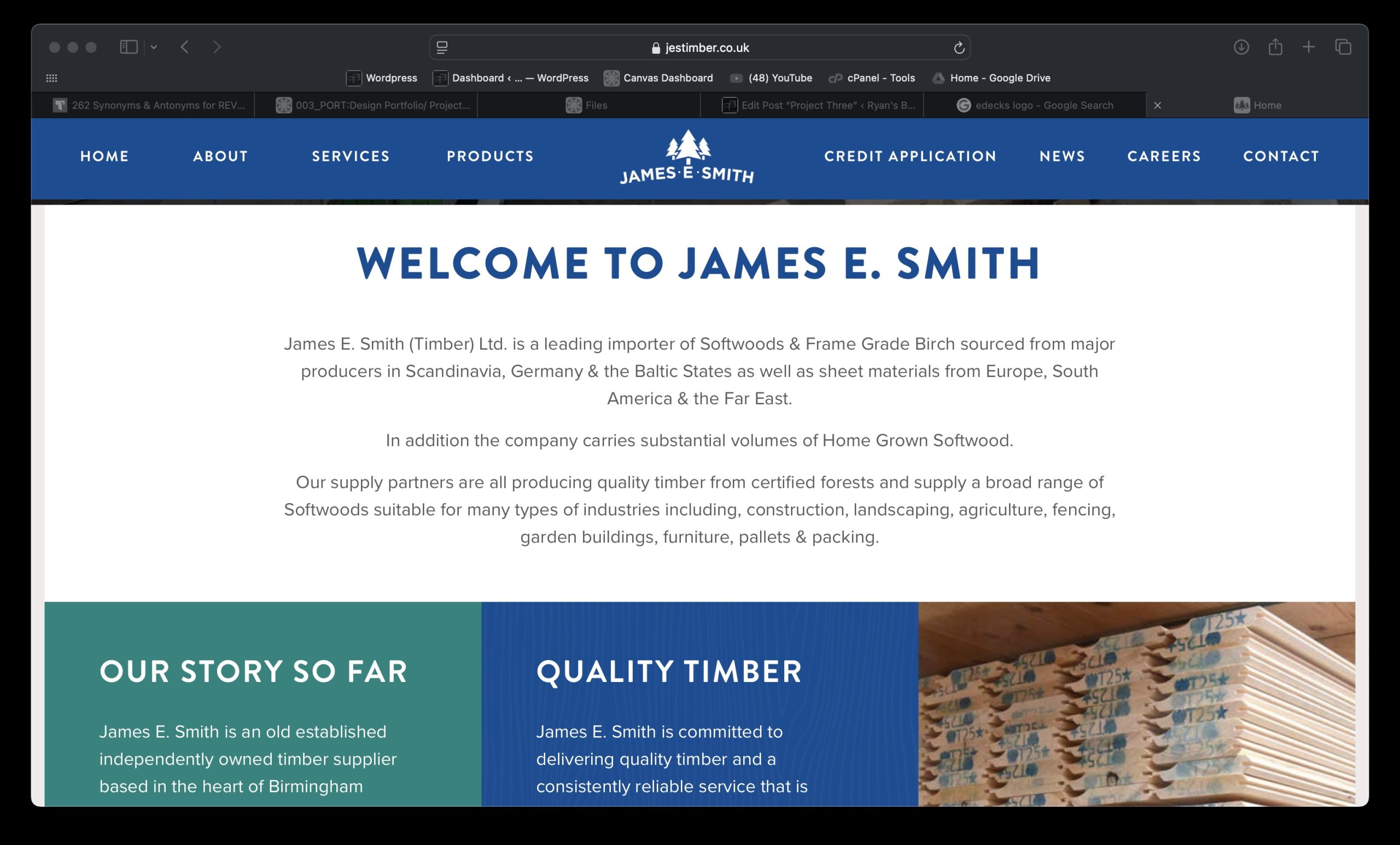
In developing my final presentation for the eDecks brand, we focused on creating a new website landing page, instructional leaflets, and social media assets. These designs were heavily informed by comparative research into existing market leaders. Mainly B&Q, Wickes, and James E Smith—each offering distinct approaches to DIY and home improvement branding.
1. Website Landing Page – Inspired by B&Q and Wickes
B&Q landing page
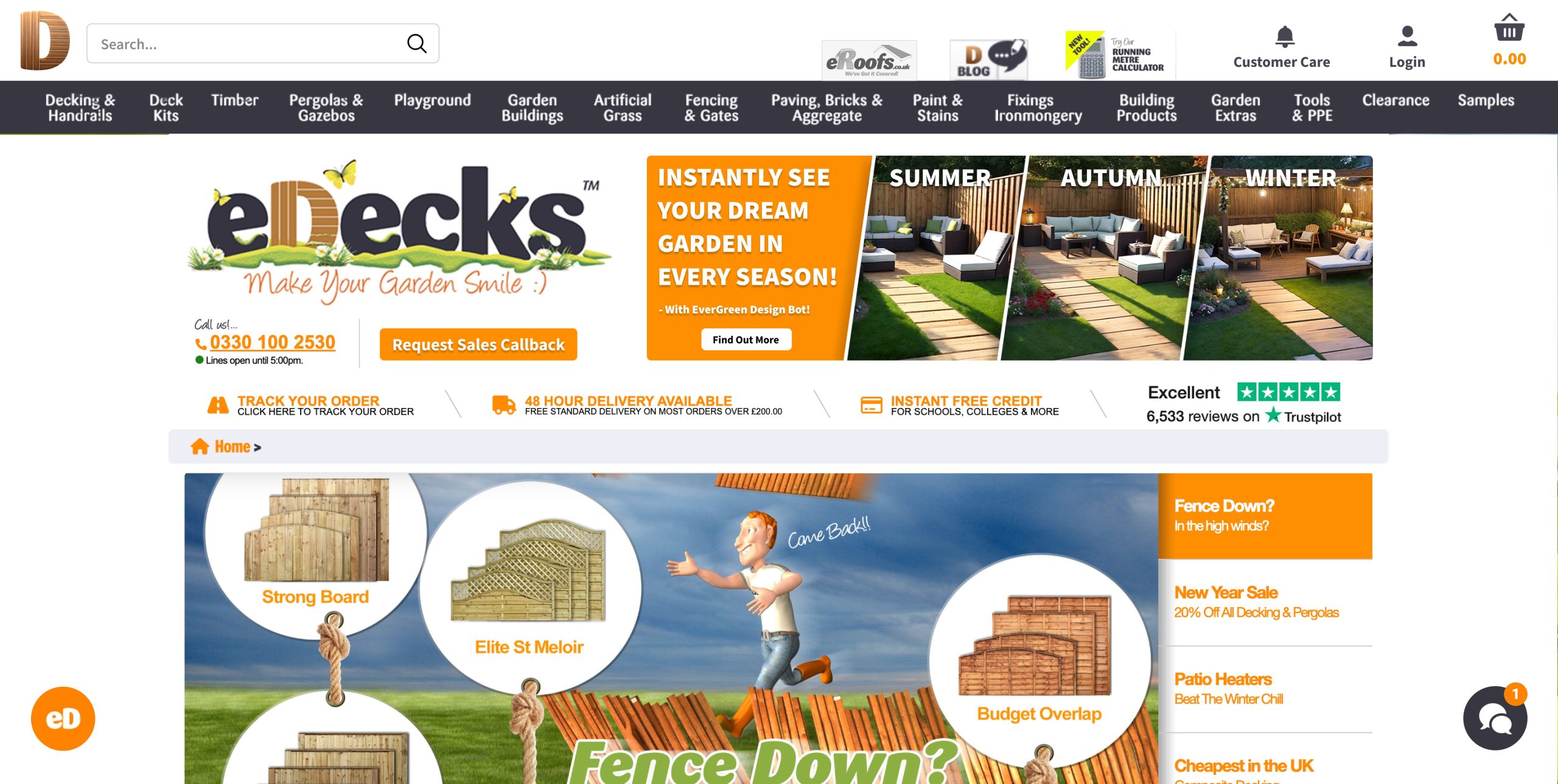
My homepage design adopts a visually engaging and interactive layout, incorporating seasonal visuals and an AI tool to “instantly see your dream garden.” B&Q’s homepage prioritises seasonal relevance and promotions, while Wickes leans toward functionality and category hierarchy. Drawing from B&Q, I embraced a bold colour palette allowing for the existing category banner to look 100 times better just by changing the colour. Wickes’ navigation not only looks strong but interactive and personalised, like the current eDecks category banner, so I ensured I kept the categories the same. Instead, I took inspiration from B&Q’s colour palette, using a bright orange as the primary to highlight and then a dark navy blue to make other elements stand out like the category banner.
Wickes landing page
2. “How To” Leaflets – Drawing from James E Smith’s Simplicity
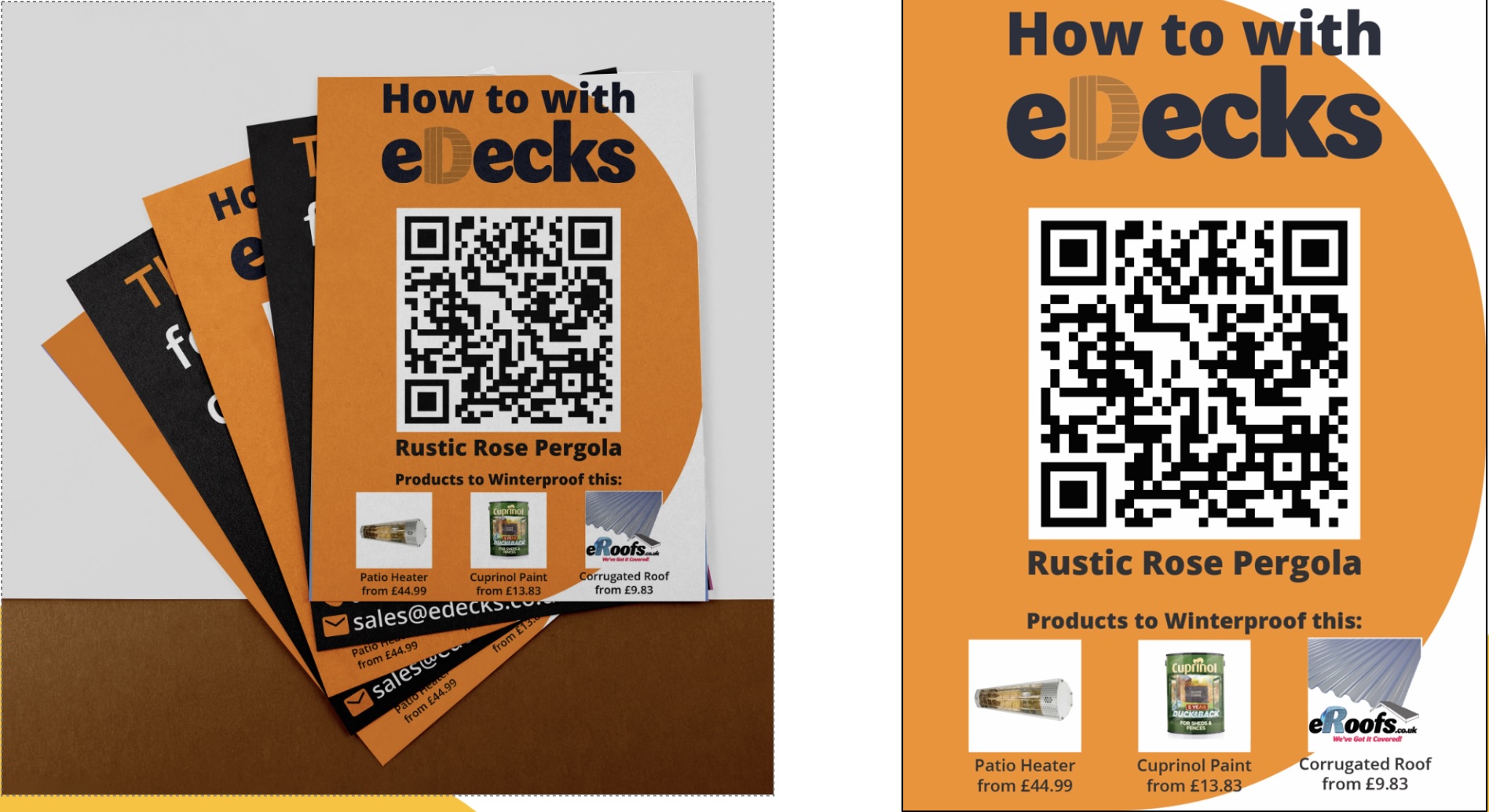
The how to leaflet series focuses on specific builds (e.g., Rustic Rose Pergola), enhanced by bold colours, minimal text, and prominent QR codes. These were influenced by James E Smith’s clean and product-focused marketing materials, which emphasize clarity over complexity. Where B&Q and Wickes often clutter print designs with multiple offers and excessive product data, we aimed for minimalist design, clean typography, and quick mobile access via QR codes.
This clarity and ease of navigation reflect the needs of DIY users—clear steps, relevant tools, and fast access to info. The consistency in branding also creates a visually memorable print item, reinforcing trust and recognition. Including actual product prices and uses adds immediate utility and reinforces eDecks’ value proposition as affordable and expert.
James E. Smith landing Page
3. Social Media (YouTube) – Blending Wickes’ DIY Community with Personality
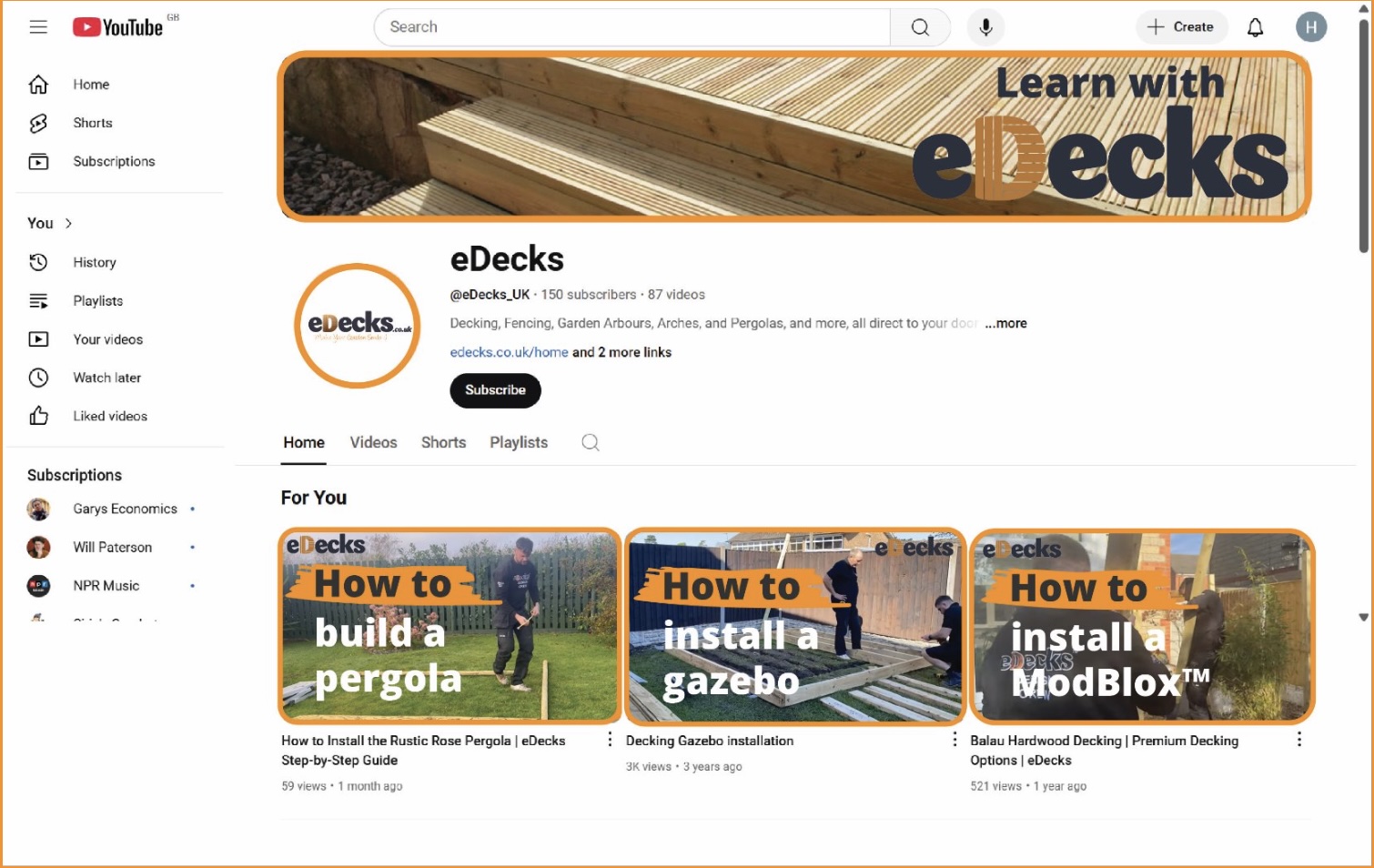
The YouTube banner and thumbnail designs adopt a how-to tone, influenced by Wickes’ content-driven social presence. Wickes and B&Q both invest in project tutorials, but often lack a unified visual identity across platforms. We resolved this by introducing a distinctive style (orange accents, bold “How to” headers) across all thumbnails and headers. This consistent tone strengthens brand presence and recognizability, critical on a platform like YouTube.
3.) Project Development- Document your group’s developing design work and what you contributed (500 words plus visuals with captions)
Our group project centred on designing elements to advertise the AI tool the marketing team came up with whilst modernising the visual branding and digital presence of eDecks. This included a redesigned website, promotional banners, social media content, and how to leaflets. Our group worked collaboratively to divide tasks according to our strengths, resulting in a final outcome that reflects a fresh, user-friendly that promotes the new Evergreen AI tool at a professional standard.
As a group, we laid the foundation by researching the current eDecks branding, identifying areas that needed visual and functional improvement. We then worked to include the Evergreen AI tool into those new visual elements so when presented at the end everything looked in uniform with each other. One team member focused on how to leaflets, which featured a QR code to help customers build their products, meaning their consumer audience can expand and broaden to novices due to the ease of a step by step. The QR code helps increase footfall to the website and in result promotes the Evergreen AI tool when people see it after scanning the code. Another created social media content, with a strong focus on brand consistency, engagement, and clarity. Having concise and eye-catching graphics are essential to increasing footfall to the website and overall sales in the winter, especially when the socials are updated daily, it keeps the audience in the loop with products and keeps customers loyal.
How-to leafletsYoutube Channel Mockup
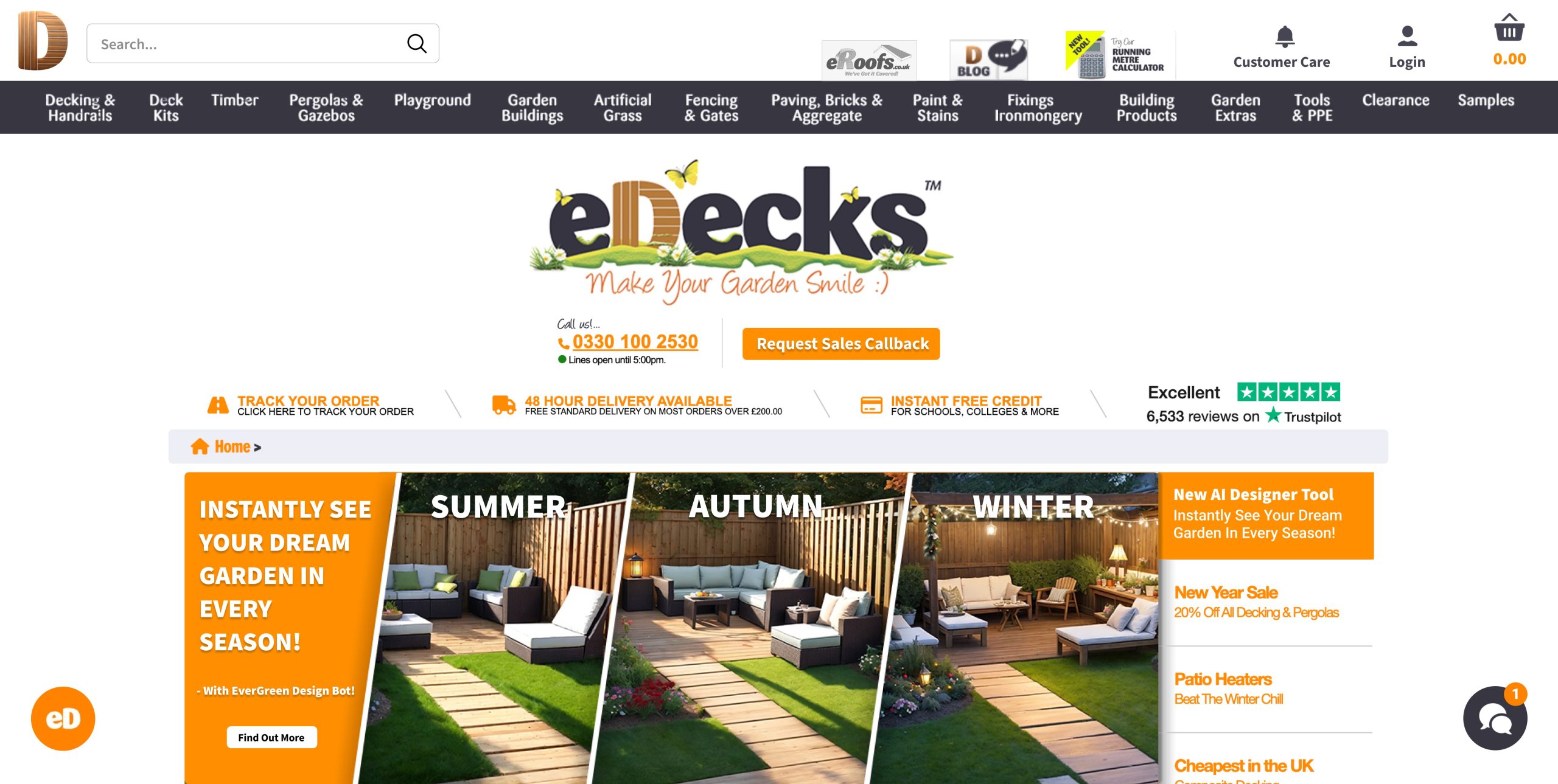
My role was to take full ownership of the website redesign and accompanying advertising banners, including an external ad example showing how eDecks could be advertised on partner websites.
To start, I designed two wireframes for the new eDecks website. The first is a homepage layout that emphasizes a clean, modern interface with clearly structured sections—featuring a hero banner, featured categories, product tiles, and easy-to-use navigation. The second wireframe presents a category or product page, with intuitive filters, tidy product organization, and room for promotional content. These layouts were designed for both aesthetic appeal and improved usability, focusing on enhancing the user experience through simplified navigation and visual clarity.
Design 1 Design 2
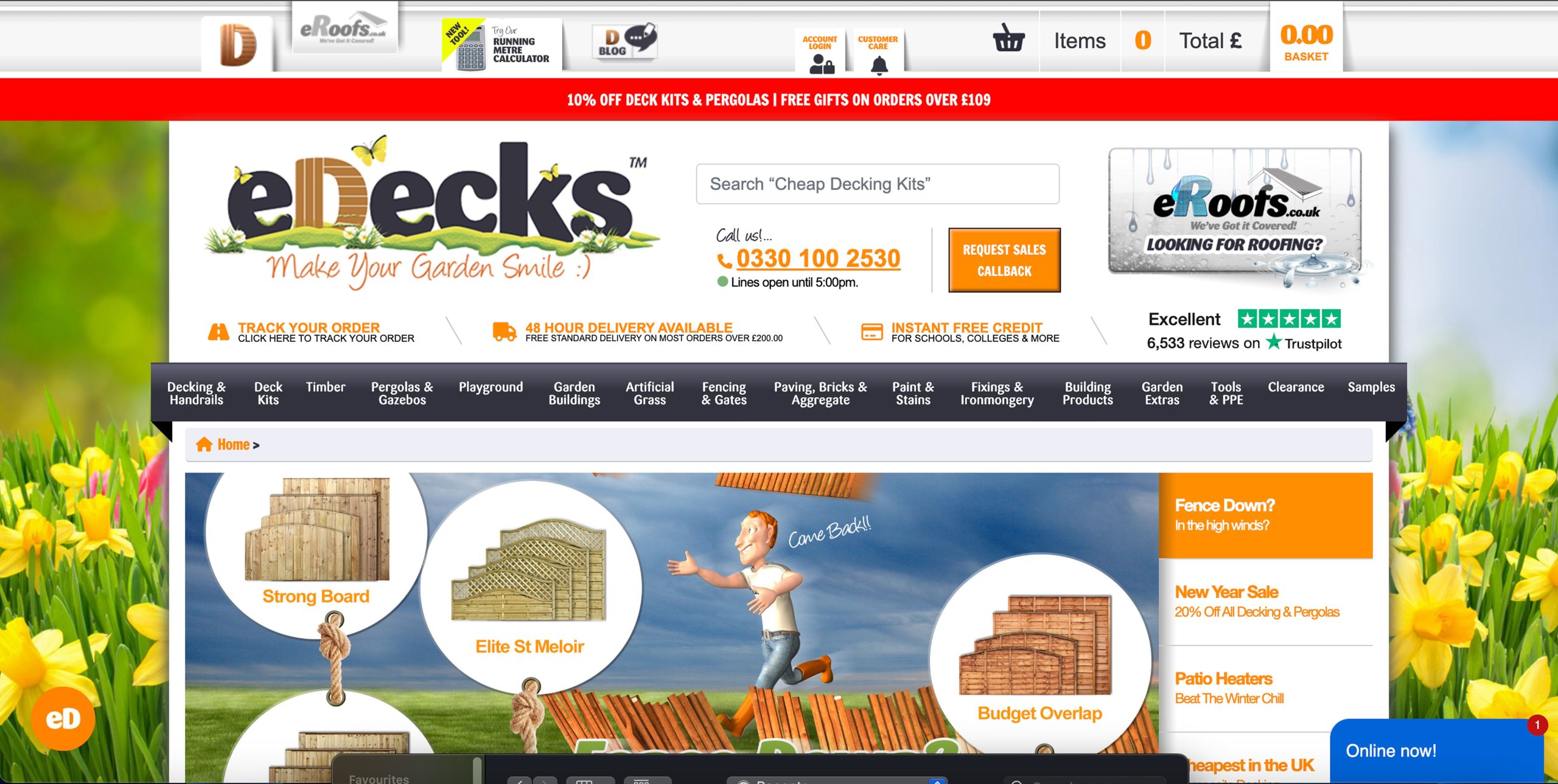
When compared to the current eDecks website, the improvements are significant. The existing site appears visually cluttered, with too many elements vying for the user’s attention—large amounts of text, mixed font styles, and busy imagery that detract from the shopping experience. The colour palette is also heavy and outdated, lacking the modern polish expected of commercial websites today. My wireframes present a more refined layout with white space and a clearer visual hierarchy, which helps users engage with content more naturally.
Current eDecks website
I also designed website banners for promotion. Importantly, the banners align visually with the new site aesthetic, avoiding the visual overload seen in the current site’s graphics. For example, the existing site uses a lot of cartoon-style imagery, which I replaced with cleaner, more professional visuals to give the brand a more polished look.
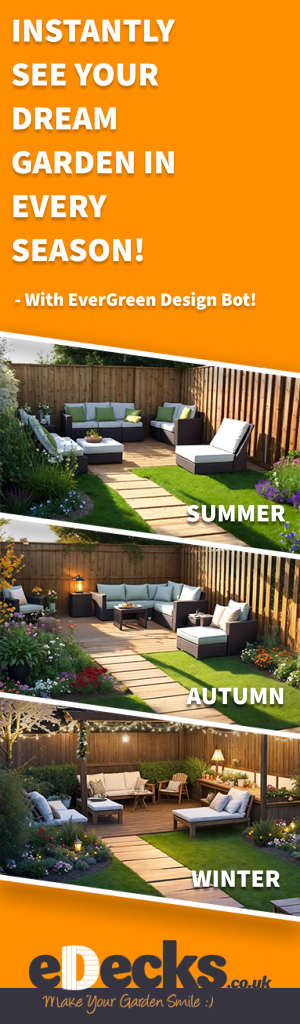
Vertical banner
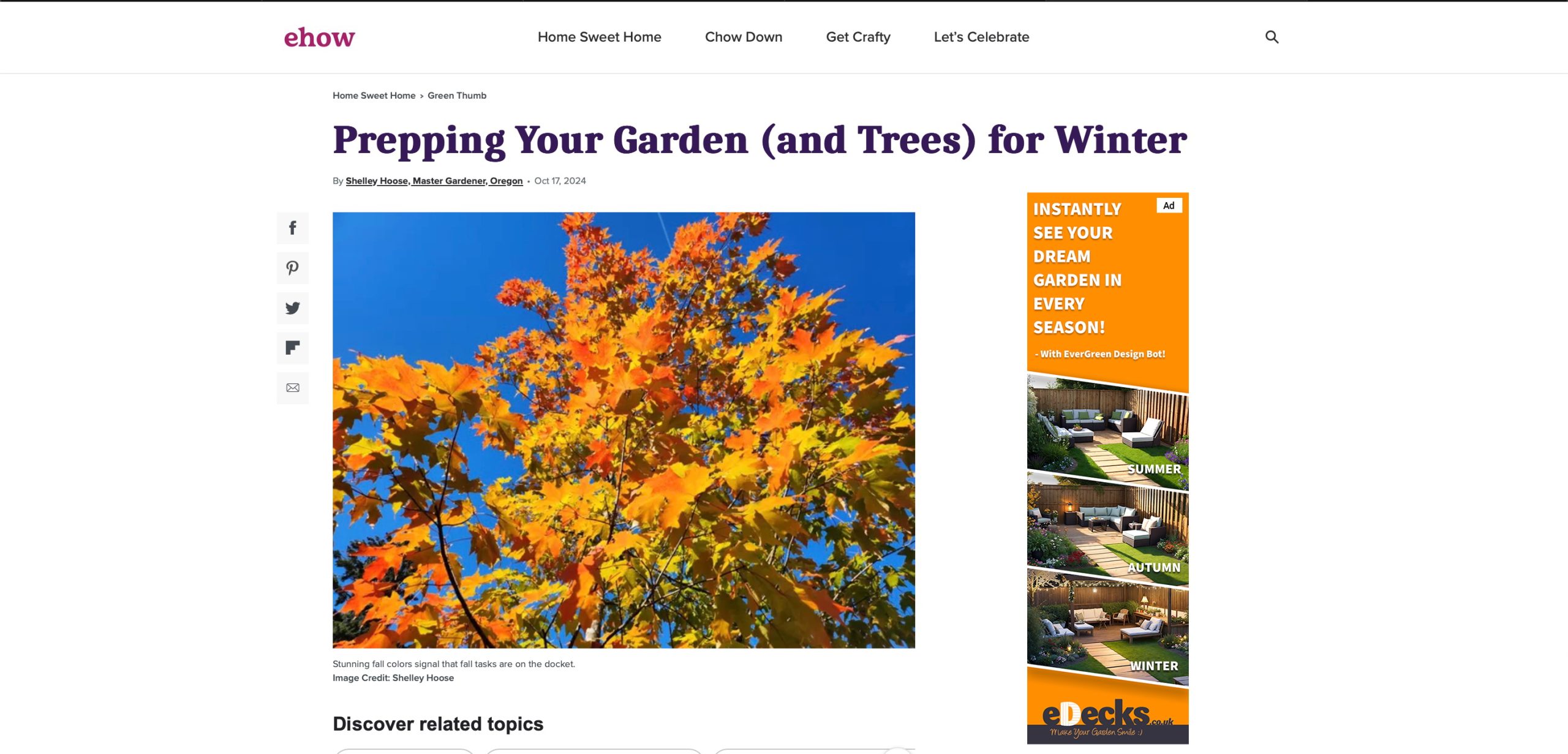
Additionally, I produced a vertical banner ad designed to run on external websites. This ad maintains consistency with the internal banners while being tailored for the format and function of a sidebar advertisement. It captures the attention of new users while staying true to the brand tone we established.
Example of the vertical banner on another website
In summary, my contributions involved envisioning a complete design overhaul for eDecks’ digital storefront and branding strategy. The wireframes and banners I produced form the foundation of a more modern, efficient, and customer-focused user experience which create a perfect new space to present and advertise the AI tool the marketing students came up with. This project allowed me to apply my digital design skills to solve real-world communication problems and collaborate effectively within a creative team.
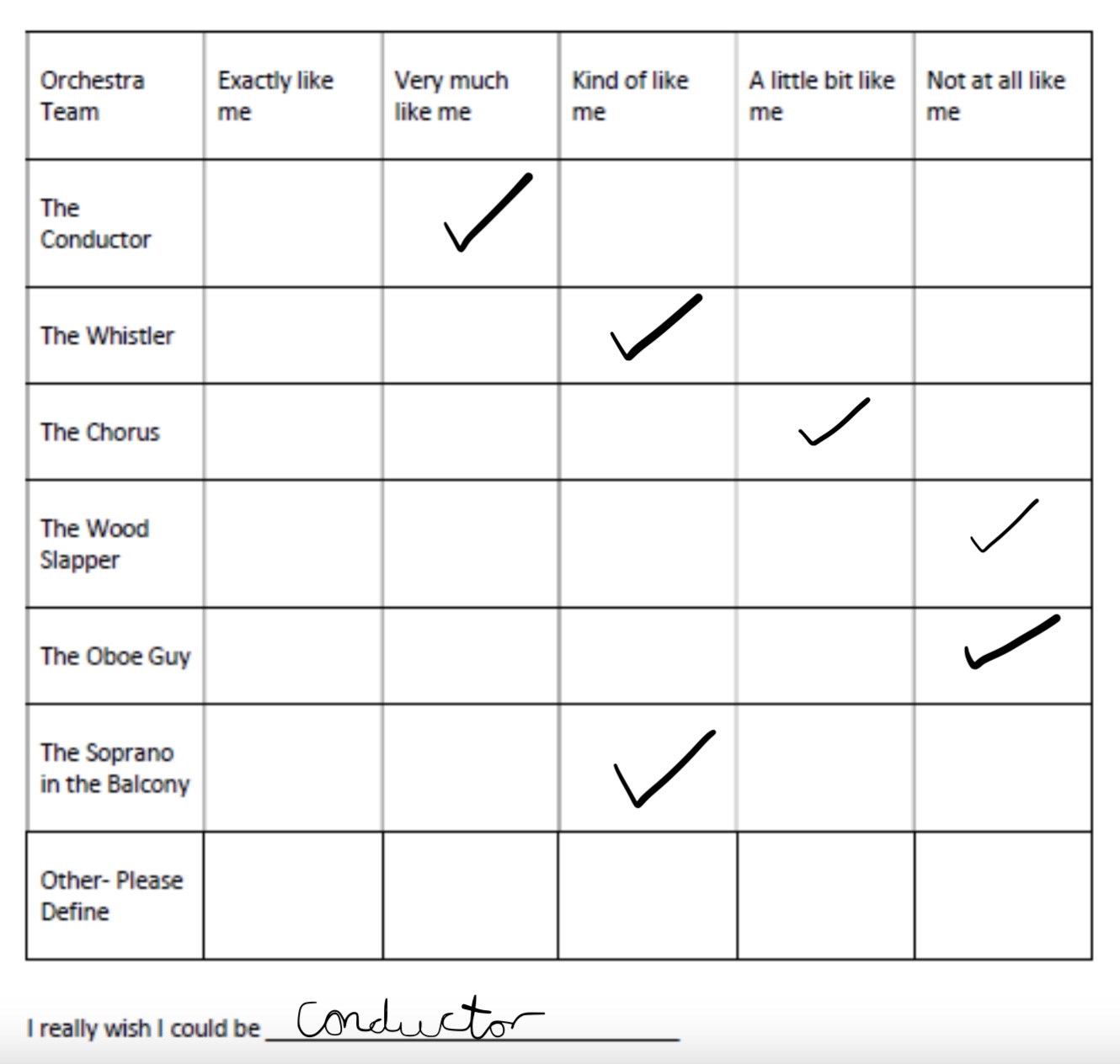
4.) Teamworking- Include Rob’s Psychometric Test results and explain your role and experiences while working within your groups. (500 words plus visuals with captions)
Filling out the psychometric test results I came to the conclusion that the conductor was the most fitted for me. This is because a conductor has strong leadership skills, effective in communication and can adapt in situations. I’m known to do all these things whilst I work as I manage a team through stressful situations and find ways to adapt and overcome elements when needed.
Throughout the duration of our group project, I played a core role in shaping the digital identity of the eDecks brand. While the rest of my team worked on other online and offline marketing content such as leaflets and social media, I concentrated on developing the web-based elements—specifically the site design to promote the AI tool and digital banner advertisements. This division of responsibility allowed us to each take ownership of our areas while contributing to a shared goal of revitalizing the brand’s overall visual identity.
Being the person responsible for the website and banner ad work meant I often had to initiate ideas independently, while still coordinating closely with my teammates to ensure alignment. This taught me the importance of communication. While we were each focused on our own elements, we had to regularly exchange progress, give feedback, and adapt ideas to maintain consistency across all outputs. These moments of back-and-forth were particularly valuable, as they helped me develop confidence in presenting design decisions and explaining my thought process clearly.
One of the challenges I encountered was finding a balance between creative freedom and team cohesion. For instance, I had ideas to modernise the website layout drastically compared to the current version—which is cluttered, heavily branded, and visually overwhelming—but I had to ensure that the changes still reflected the essence of eDecks and aligned with what the rest of the team was creating. I navigated this by suggesting subtle visual improvements that wouldn’t alienate the current customer base, such as simplified layouts, softer colours, and more streamlined navigation, while keeping some familiar design cues.
Another key takeaway from this project was understanding the value of adaptability. When creating the web banners, I had to think beyond static visuals and consider how these designs would be experienced in context—on desktops, mobile devices, or as part of a wider advertising campaign. At one point, I adjusted the banner layout based on feedback from a teammate working on social media, which helped me think more flexibly about cross-platform consistency.
Working as part of a team also reminded me of the importance of trusting others to handle their roles, and how a good final outcome doesn’t always rely on doing everything yourself. Seeing how the social media and leaflet content came together alongside my web designs was a highlight, as it gave me a greater appreciation of how all aspects of a brand need to work together.
1.) Ethical or Sustainable Subject- Include background research about your chosen subject, audience and purpose (500 words plus visuals with captions)
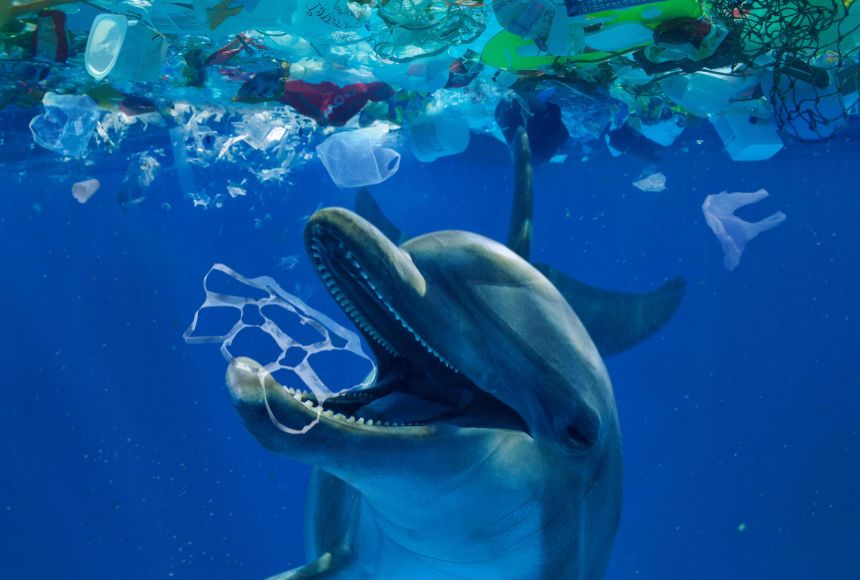
Ocean pollution, particularly plastic waste, has emerged as one of the most pressing global environmental issues. The scale of the problem is immense—each year, an estimated 11 million tonnes of plastic waste flow into the ocean, a figure projected to triple by 2040 without urgent action (Pew Charitable Trusts and SYSTEMIQ, 2020). This pollution damages marine ecosystems, harms biodiversity, and endangers the health of both animals and humans. Plastic debris is commonly ingested by marine animals such as fish, turtles, and seabirds, often leading to death through starvation, internal injuries, or entanglement (National Geographic, 2023).
Dolphin eating plastic
Scientific studies have also shown that plastics break down into microplastics that can be ingested by smaller sea life, eventually entering the human food chain. Recent findings suggest microplastics have now been detected in human blood and even lung tissue, raising concerns about long-term health effects (BBC News, 2022). This highlights the widespread and systemic nature of plastic pollution—not only as a threat to wildlife, but also as a human health risk.
In my animation, the fish serves as the central protagonist. This decision was made to personify the impacts of plastic waste on marine life and create an emotional connection with viewers. Through classical animation techniques, the fish is shown moving freely before being confronted and ultimately trapped by a plastic bag. The use of character-driven animation makes abstract issues like pollution more tangible and emotionally compelling, especially when communicated visually (WWF, 2023).
A key part of the narrative is the conceptual design transition: as the fish becomes trapped and dies, the camera zooms into the plastic bag, transitioning to a new scene where the bag is resting on top of a recycling bin on land. This moment symbolically ties the underwater tragedy to human behaviour, showing that pollution in the ocean originates from our actions on land. According to the International Union for Conservation of Nature (IUCN, 2021), more than 80% of ocean plastic comes from land-based sources, primarily due to poor waste management and littering.
The animation concludes with the message: “The ocean is NOT a bin. Dispose of waste responsibly.” This call to action serves both educational and motivational purposes. The animation encourages audiences not only to understand the consequences of pollution but to take responsibility and change behaviour through proper disposal and recycling.
My target audience includes children, teenagers, and the public. Animation is particularly effective for youth education due to its accessible, engaging format (UNESCO, 2020). The freedom of animation allows complex issues like sustainability to be represented in a visually striking and emotional way, which is critical for awareness campaigns. By combining narrative, symbolism, and a clear moral message, the animation aims to raise awareness of ocean pollution while promoting ethical and sustainable behaviour.
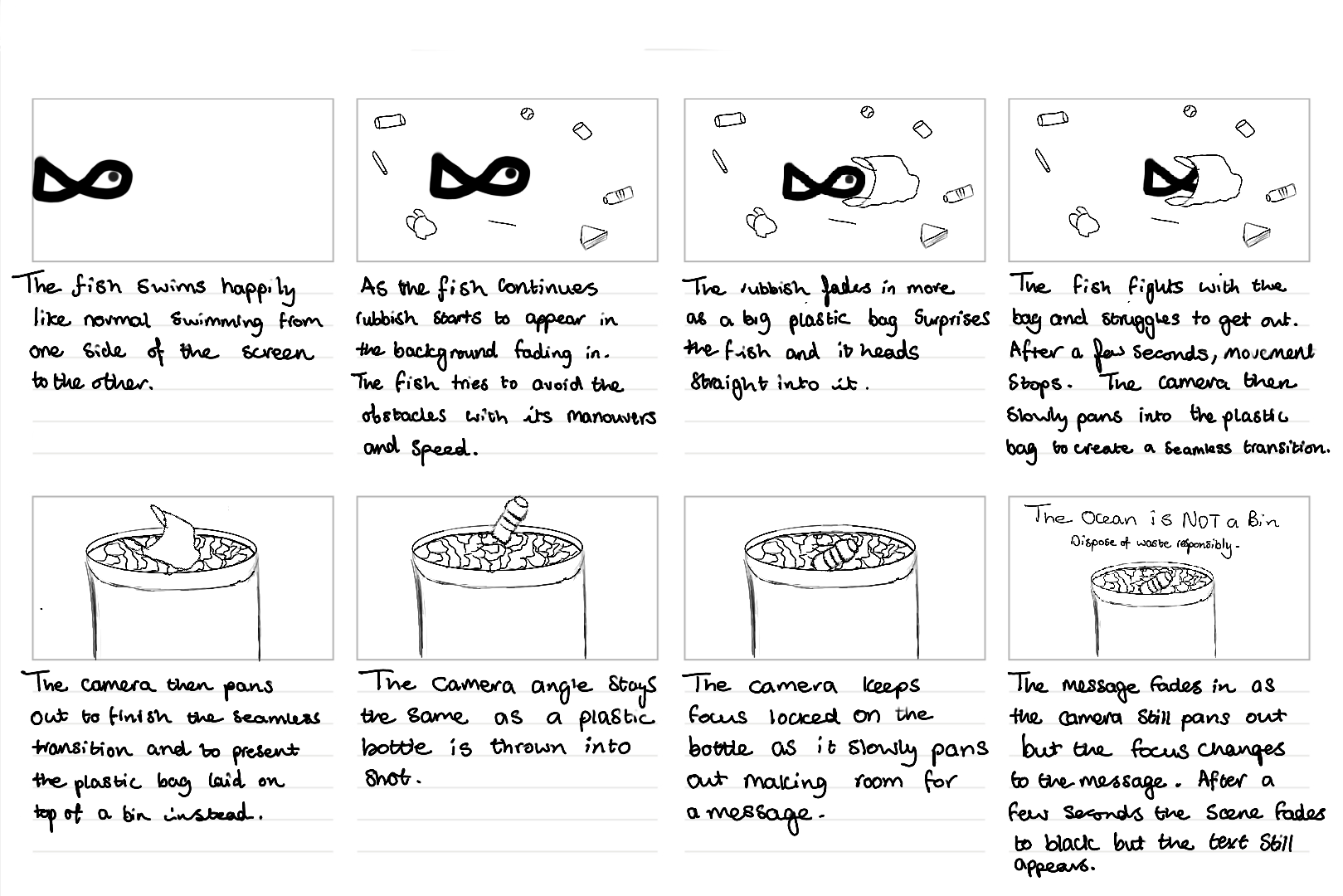
2.) Conceptual Design Transition Planning- Include your eight-panel storyboard (500 words plus visuals with captions)
Storyboard of my animation
My storyboard represents a classical animation narrative centred around the theme of ocean pollution and its consequences on marine life. The heart of the story follows a lone fish, who is a symbol of innocence and vulnerability. Through the fish’s journey, I aimed to tell a story that’s both emotionally engaging and something that gets people thinking about their actions and responsibilities. The fish begins swimming happily in a clean, unspoiled ocean. This visual was chosen deliberately to create a peaceful baseline from which disruption could occur. As more rubbish gradually appears in the scene, the tone starts to shift. The slow fade-in of debris mirrors how environmental damage doesn’t happen all at once but increases over time due to neglect and human activity. The fish attempting to avoid the rubbish reflects nature’s struggle to adapt to unnatural threats
The pivotal point is when the plastic bag appears unexpectedly, and the fish swims directly into it. This was designed to be abrupt and shocking. A sudden danger to the fish that feels almost predatory. The fish’s fight to escape, and eventual stillness, marks a tragic turning point in the narrative. Rather than cutting straight to a new scene, I decided to employ a conceptual design transition to shift the focus from underwater to land.
I chose zooming into the plastic bag and emerging out of it onto a bin on land because it avoids a jarring scene change and instead guides the viewer through the object that represents the central problem: the plastic bag. This bag serves as both a literal and metaphorical tool, tying the tragic underwater moment to its cause—human waste disposal practices.
The decision to zoom into the bag was also influenced by the idea of visual continuity. Instead of using a traditional fade or cut, this method maintains the viewer’s focus on the plastic itself, forcing them to confront it directly. When the scene transitions to the bag resting on a bin near a beach, the viewer immediately recognises it as the same object. This continuity deepens the emotional impact and reinforces the message that the pollution harming marine life originates on land, often just carelessly discarded.
Furthermore, this kind of transition creates an unexpected but smooth flow between two contrasting scenes—one tragic and one corrective. It subtly shifts the narrative from despair to potential hope. The storyboard shows that once on land, a plastic bottle is thrown into the bin, and the camera pans out, allowing room for the final message to fade in: “The Ocean is NOT a Bin. Dispose of waste responsibly.” This transition wasn’t chosen just for its visual appeal. It ties the death of a fish to the moment someone chooses to recycle—a symbolic loop that makes the issue personal and actionable.
The storyboard is an early idea and development of what I want my animation and story to look like. When animating ideas can change and new ones can develop, so my final result of this piece may be slightly different to what my storyboard shows. But the core concept will remain the same.
3.) Visual Design Treatment- How have you incorporated Edward Tufte’s five theories into your work? (500 Words plus visuals with captions)
Edward Tufte, a pioneer in data visualisation, outlined five core principles for effective information design: 1. above all else, show the data; 2. maximise the data-ink ratio; 3. erase non-data-ink; 4. erase redundant data-ink; and 5. revise and edit (Tufte, 1983). While originally intended for quantitative graphics, these principles can be applied to visual storytelling like animation.
1. Above All Else, Show the Data
My animation centres on a fish’s journey through polluted waters, culminating in its entrapment by a plastic bag. This narrative illustrates the impact of ocean pollution on marine life effectively “showing the data” by transforming statistics into an emotional story. By illustrating the consequences of plastic waste, the animation conveys difficult environmental issues in an accessible manner, aligning with Tufte’s emphasis on presenting data clearly and compellingly (Tufte, 1983).
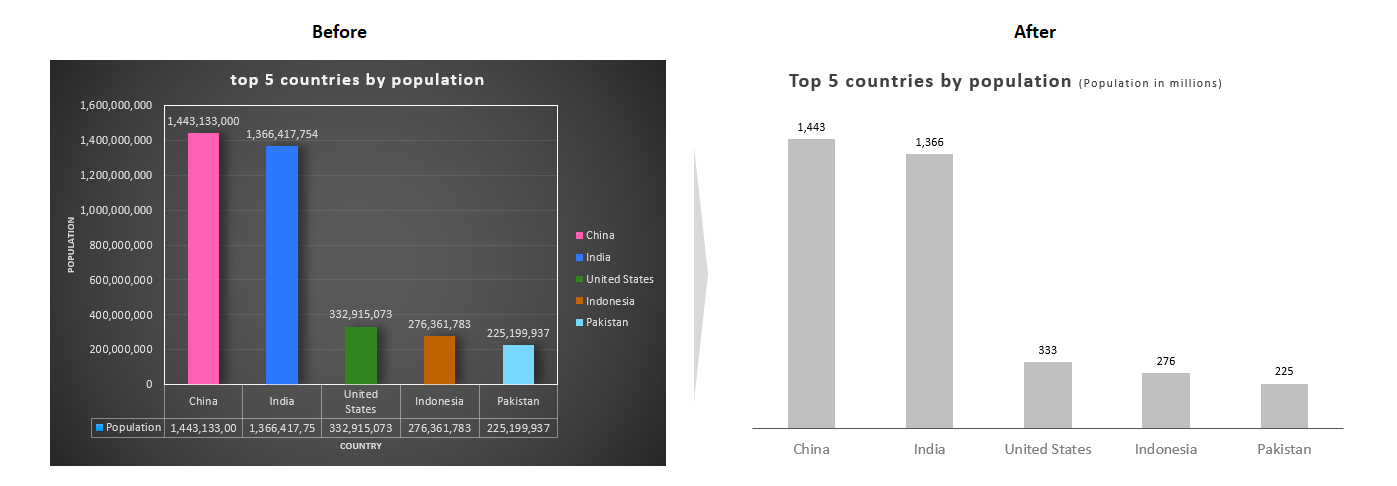
2. Maximise the Data-Ink Ratio
Tufte believes in maximising the proportion of a graphic’s ink that presents data, minimising non-essential elements (Tufte, 1983). In my animation, every visual component serves a purpose: the fish represents marine life, the plastic bag symbolises pollution, and the transition to a recycling bin shows the importance of proper waste disposal. By ensuring that each element contributes directly to the narrative, the animation maintains a high data-ink ratio, enhancing its communicative efficiency.
Improving data visualisation using the principle of Data-Ink Ratio
3. Erase Non-Data-Ink
Non-data-ink refers to decorative elements that do not convey information. My animation avoids unnecessary elements, focusing solely on the story’s essential components. The absence of excessive visuals ensures that the viewers’ attention remains on the core message, demonstrating Tufte’s principle of eliminating non-informative elements to prevent distraction (Tufte, 1983).
4. Erase Redundant Data-Ink
Redundant data-ink involves repeating information unnecessarily. My animation presents each narrative point, such as the fish’s entrapment and the transition to a recycling bin. It only happens once, avoiding repetition. This approach maintains the viewer’s engagement and reinforces the message without redundancy and follows Tufte’s guideline of eliminating repetitive elements that do not add value (Tufte, 1983).
5. Revise and Edit
My animation’s conceptual design transition from the ocean scene to a road with a recycling bin, demonstrates thoughtful revision and editing. This shift not only provides a solution to the story but also reinforces the call to action: “The ocean is NOT a bin, dispose of waste responsibly.” By refining the animation to include this transition, its impact and clarity is enhanced, embodying Tufte’s principle of continuous improvement through revision (Tufte, 1983).
By integrating Tufte’s five principles, my animation effectively communicates the severe consequences of ocean pollution and the importance of responsible waste disposal. The deliberate design choices ensure that every visual element serves the narrative, enhancing clarity and emotional resonance. This alignment with Tufte’s guidelines highlights the animation’s potential as a powerful educational tool.
4.) Relevant Animation History- Include at least three links to existing animation examples related to your chosen sustainable or ethical subject area and analyse them. How have they influenced your final animation? (500 words plus visuals with captions)
In creating my classical animation on ocean pollution, I analysed several existing animations that address similar sustainability themes. Three key animations—The Beauty by Pascal Schelbli, Hybrids by students at MoPA, and All the Way to the Ocean by Doug Rowell. These have significantly influenced my creative decisions in terms of visual storytelling, tone, and environmental messaging.
1. The Beauty (2019)
Pascal Schelbli’s The Beauty is a short film that visualises an underwater world where plastic waste appears as part of the natural ecosystem. Plastic bottles and bags move fluidly with the currents, mimicking marine life (Schelbli, 2019). The film blurs the line between pollution and nature, drawing attention to the dangerous normalisation of plastic in our oceans. This idea of integrating pollution into the marine environment influenced the way I introduced rubbish in my animation. Rather than simply presenting rubbish as background litter, I had the fish encounter and interact with the waste directly. This was inspired by Schelbli’s approach, which reinforces how deeply embedded plastic has become in aquatic ecosystems.
The Beauty – Animated Short Film by Schelbli, P.
2.Hybrids (2017)
Hybrids is a short, animated film produced by MoPA (Montpellier’s School of Computer Graphics) students, portraying sea creatures that have adapted to survive by incorporating trash into their bodies (MoPA, 2017). The concept of marine animals becoming one with pollution had a serious impact on my storytelling. Although my animation follows a traditional narrative arc, I used the idea of inescapable pollution to drive the tension. Like Hybrids, I wanted to present plastic as something unavoidable and life-threatening in the fish’s environment, culminating in its tragic entrapment in a plastic bag.
3. All the Way to the Ocean (2016)
Doug Rowell’s All the Way to the Ocean uses a simple, educational style to teach younger audiences about how litter travels from urban areas into the sea (Rowell, 2016). The animation demonstrates the consequences of human negligence in a relatable and hopeful manner. This influenced my decision to include a clear cause and effect sequence in my animation. The transition from the underwater death scene to a street with a recycling bin echoes the narrative structure of Rowell’s film. It conveys the idea that individuals have the power to intervene and prevent such tragedies through responsible waste disposal.
These three animations influenced my work by demonstrating how visual storytelling can be used to evoke emotion, convey urgent environmental messages, and encourage behavioural change. By studying their use of metaphor, tone, and structure, I was able to shape my own animation into a compelling piece that communicates the tragic reality of ocean pollution while also suggesting a solution.
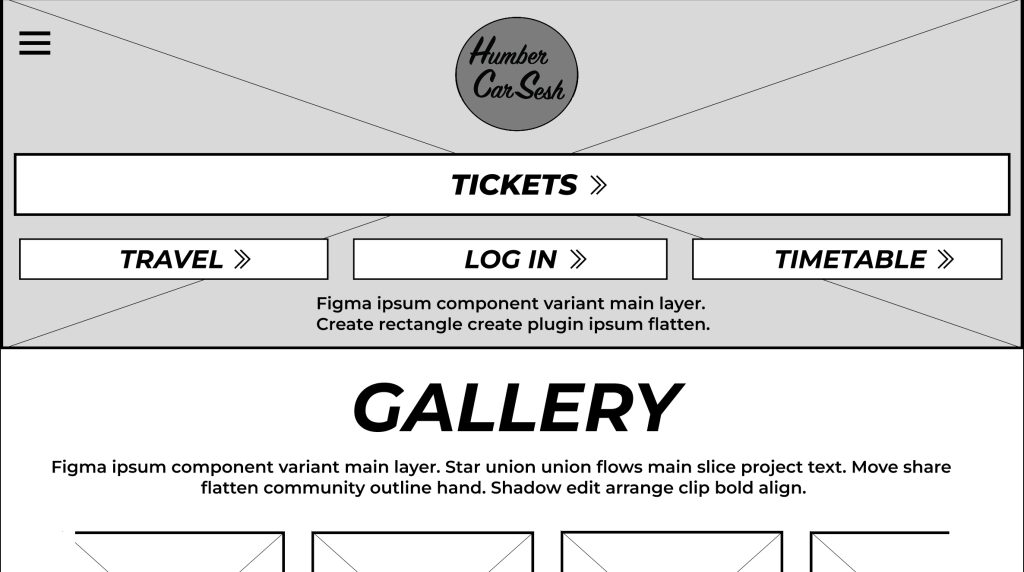
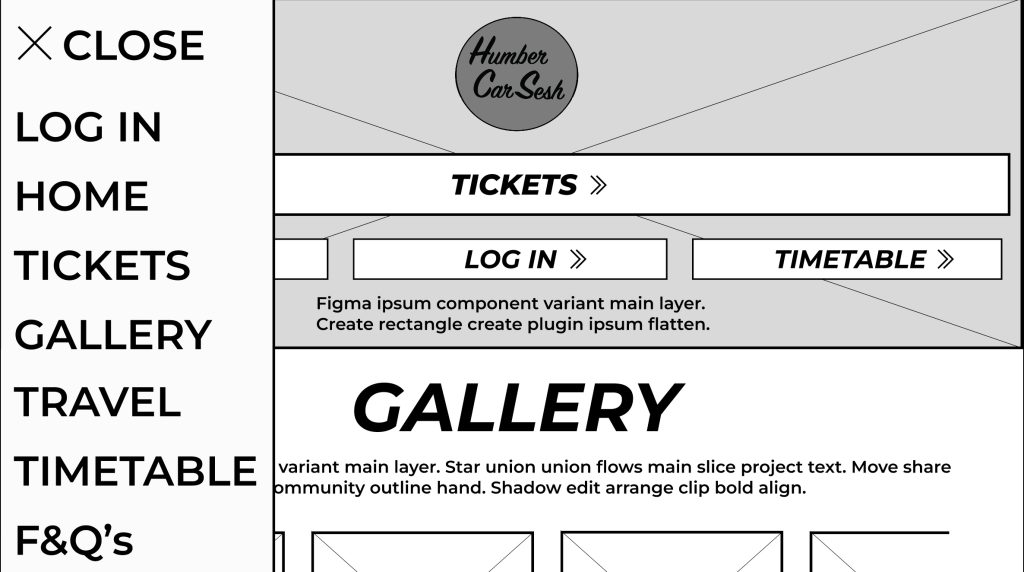
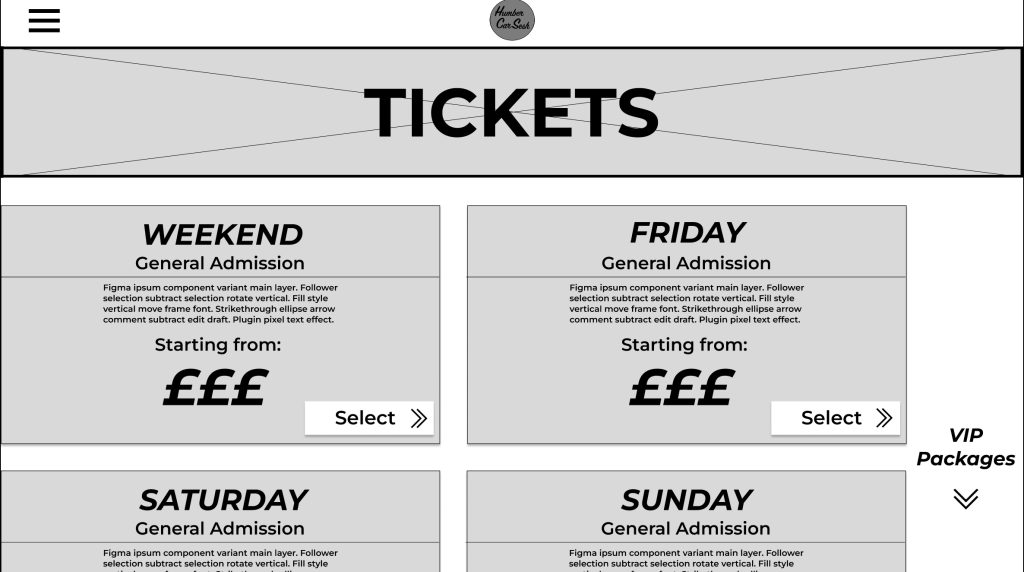
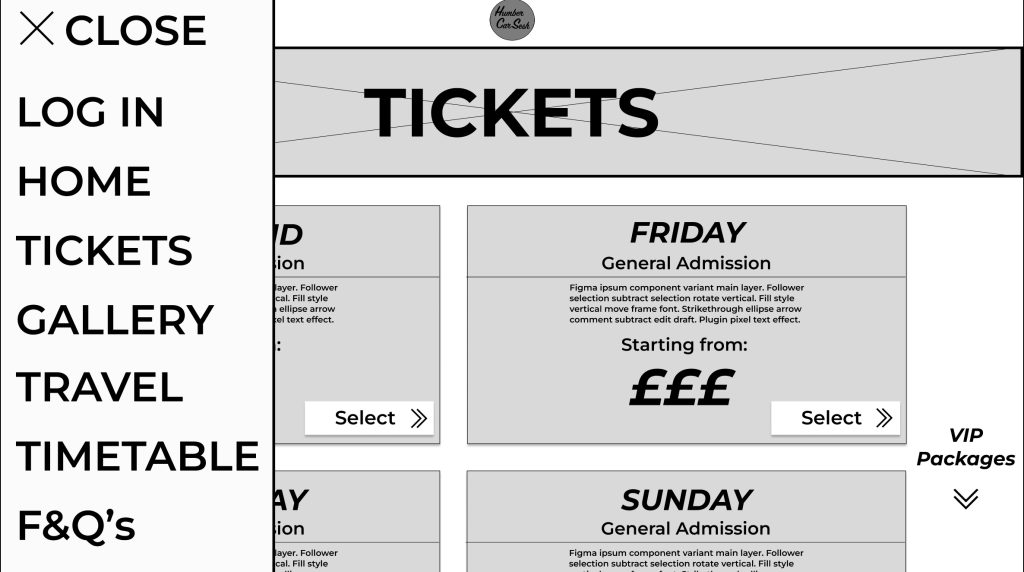
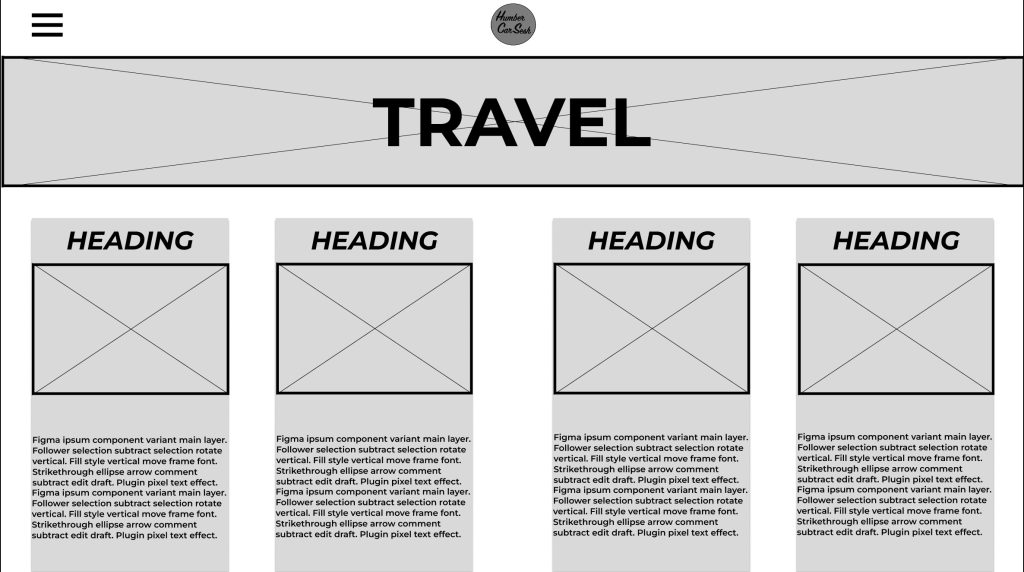
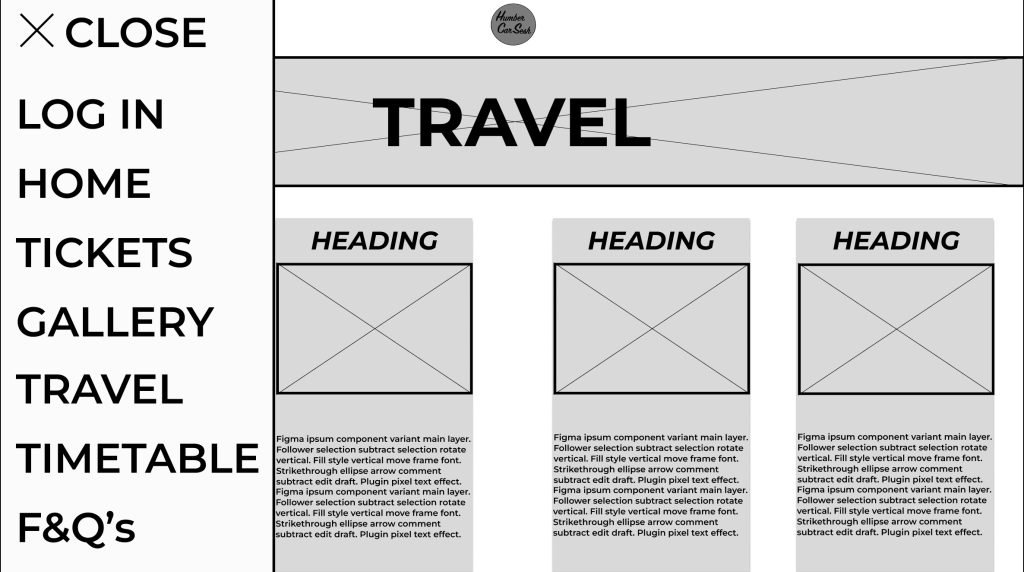
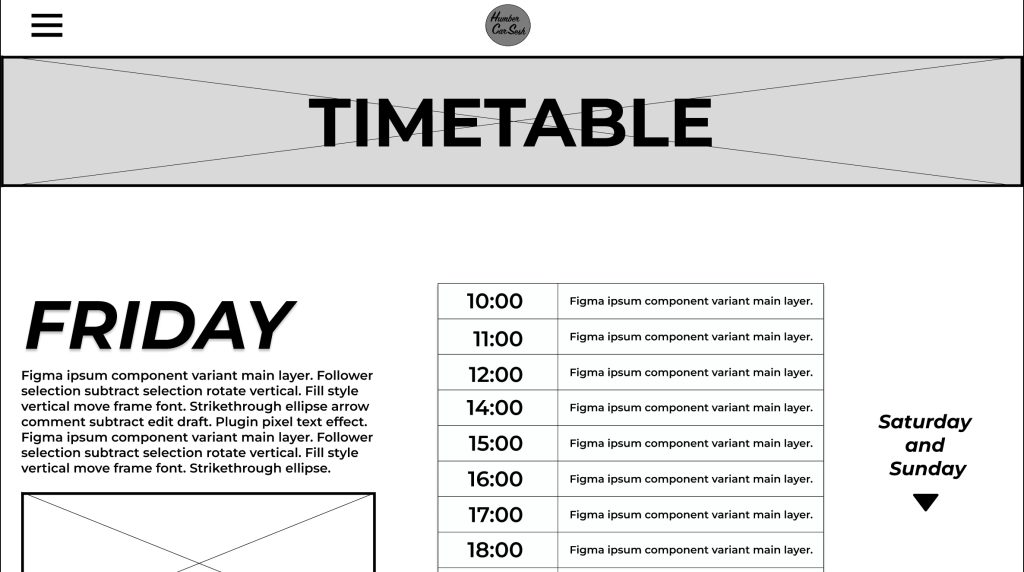
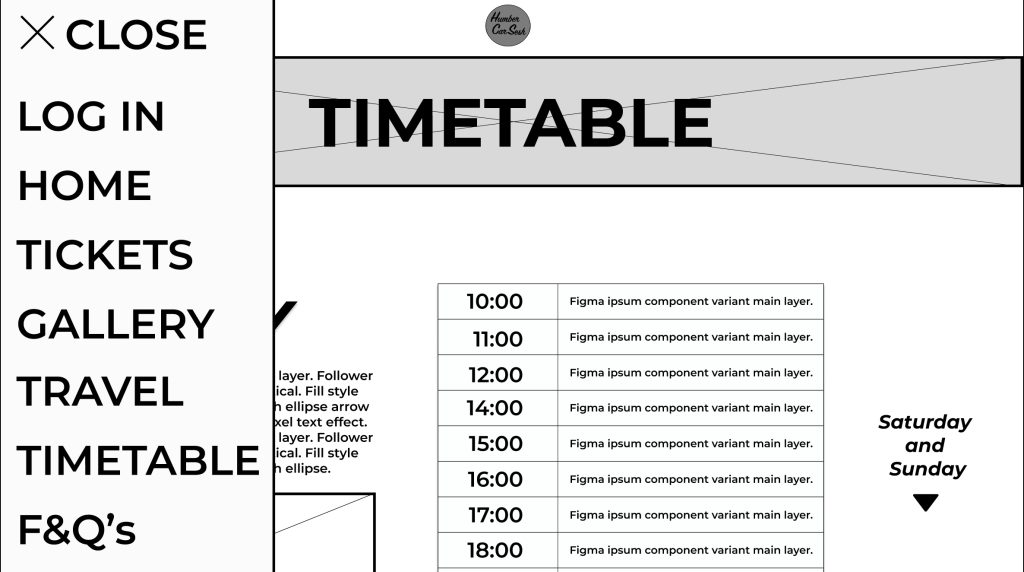
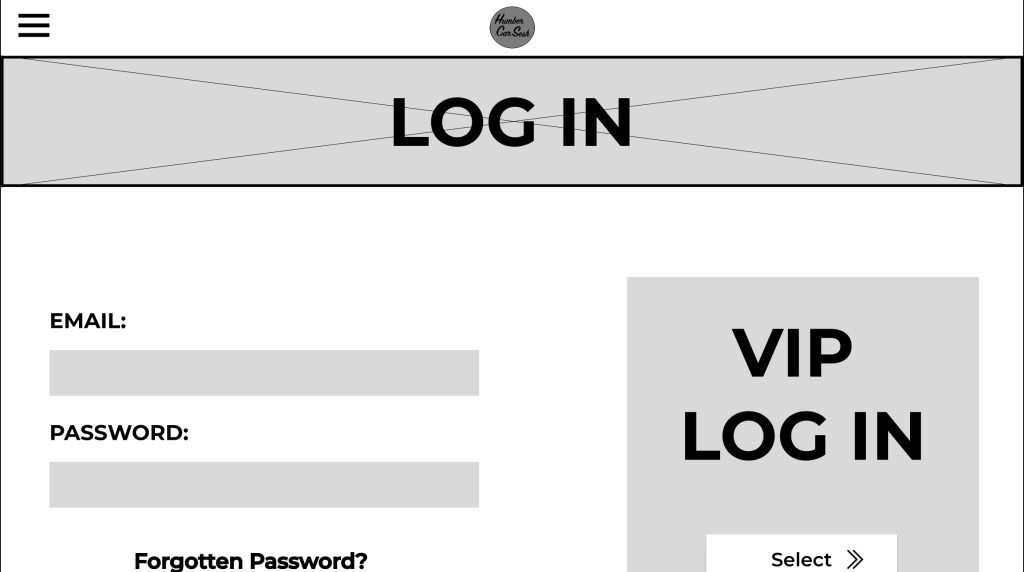
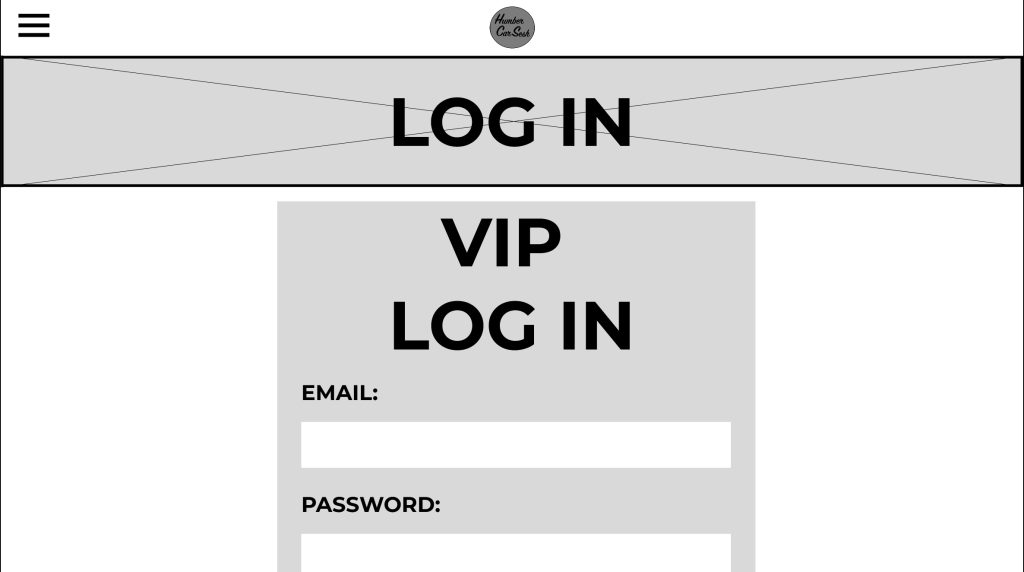
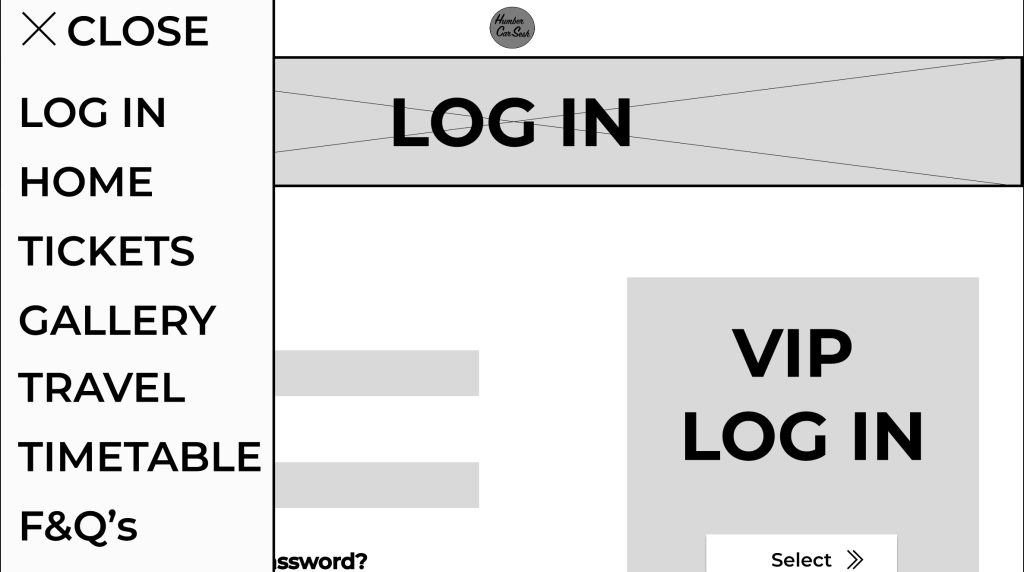
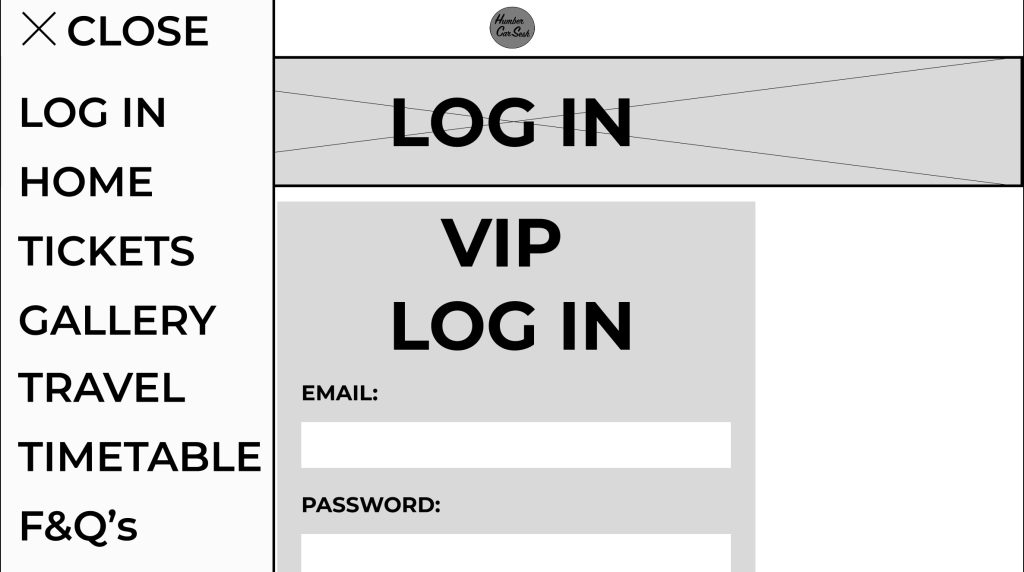
I made some significant changes to the design from the low fidelity design. One of these significant changes was the change in how the typography was presented. For example, any text that was used as a heading or presented essential information was capitalized and italicized. Now in the mid fidelity the text is more noticeable, and the italics gives the text a sense of motion. The festival name and the text underneath were replaced with a simple logo I made because it makes the user focus more on the call-to-action buttons first and helps emphasize the law of similarity. The page has been extended for my mid fidelity adding a gallery section and a frequently asked questions section. The gallery section did not take much room up because I created a frame for a slideshow so in the future when the buttons are pressed the images move along. This was to accommodate for the design principle of simplicity; it stops the user from scrolling down the page endlessly to get past the gallery section if they do not want to view all of it. Developed from the low fidelity design is the functioning menu that takes the user to various parts of the website with ease. The menu also follows the accessibility design principle because some people will use the menu to navigate to the tickets etc. and not use the call-to-action buttons because they want to explore the site with leisure. The tickets page was reworked to be less compact and more user friendly by having bigger banners to display the price and information. The arrows throughout the mid fidelity design have been updated from the low fidelity because the new arrows give me a future opportunity to animate them when the user hovers over the buttons. There was not much change to the timetable and travel page as from the survey I created, the responses resulted in them being minor advisories, for example to change the heading to the top so it gives more room for information below. I also gave the heading a drop shadow and bold italics to stand out to the user, reducing the time for them to find the information they are looking for (Fitts’s Law). The Log In page was updated in a couple of ways. The text was capitalised and made bolder for the users to understand the importance of the page. The VIP Login button was moved and remade for it to be seen by all users. I separated it from the rest of the page by putting it in a separate-coloured box to stand out. This sends the message that the box is for VIPs only and may intrigue users to buy the VIP to enter that side of the website. I got rid of the search bar that was originally in my low fidelity design because due to my menu being simplistic and efficient enough to use, I decided there was no need for both.